Once Upon a Time is one of my favorite shows (I almost wrote "new" favorite shows, but since it is more than halfway through its second season, I can't really call it new anymore, can I? I still think of NCIS:LA as new, though, and it's in its fourth season. I guess it just takes me a really long time to get used to a show!). I am not quite as enamored of it as I was in its first season, but I still really enjoy it. I'd enjoy it more if all of the characters except, possibly, Gold and Granny, didn't do really stupid things on a really regular basis, and then act shocked when said stupid decisions come back to haunt them, but even so. It's a fun show to watch.
Last Sunday's episode really got me thinking. (Ahead lie theme-spoilers, though I won't be giving any details away. Still, stop reading if you haven't seen it and don't want to know anything about it.)
*****
*****
*****
Still here? Right.
At the end of this episode, it looked like Evil had taken another giant leap forward toward defeating good. And Snow was sick of it. Tired of doing the right thing every time, and coming out poorer for it. Tired of always showing mercy and having it come back around to haunt her. Tired of always taking the high road, when it seemed only to hurt those she loved.
David tried to comfort her, but let's face it, David is really good at hitting things and making noble-sounding proclamations, not so much at ... well, anything else. So his comforting speech and meant-to-be-encouraging words fell flat. In fact, he was lucky, because if I'd been Snow, I would have decked him for his lame, cliched words. She just basically ignored him. Kind, kind Snow.
Here's what he should have said:
"You are absolutely right. We have been fighting evil our entire lives, and every time we think we've won, it crops back up and steals our happy ending. But that's the thing, isn't it? We aren't fighting for our own happy ending. We're fighting for Emma's happy ending, for Henry's. If we are just fighting for ourselves, how are we any different? Regina wants her happy ending, and we want ours. The means we take to that end are different, but they're both driven by selfish motivations.
"What makes us different, is that we aren't just fighting for ourselves. We are fighting to make the world - both this world and our other home - better for everyone. Safer. We are fighting so our daughter and grandson can live in freedom, instead of in bondage to evil.
"And yes, I know that you are tired. It's okay to be tired. It's okay to want to lay this burden down. It's understandable that you feel it isn't worth it. That's why I'm here. I still believe. I'll carry you through this period of doubt, and someday, when I'm the one struggling, you'll carry me. That's what we do for each other."
I think sometimes, especially in fantasy, it's almost easier to make Evil nuanced than Good. We're been trained to go against the cliched "bad for the sake of being bad" guy, giving them all kinds of depth and interest, but in this era of anti-heroes, it can be hard to remember what it is that makes the true hero stand out.
I recently re-read Stephen Lawhead's Taliesin, and while it isn't the brilliant, gripping prose I remembered it being when I was eleven and enthralled by it all, parts of it did still stand out to me with a shining, brilliant light. The notion of true heroism being fighting against the dark even when you know it's hopeless, even when you know you will lose, simply because it is the Right Thing, and because you have faith that eventually, even if you're not there to see it, light will overcome the darkness, and you want to be a part, however small, of that light.
I'm interested to see where OUAT goes with this "Dark Snow" theme they've brought up. I hope they'll use it as a chance to bring in some of these deeper motivations behind "being good." Given their track record, I kind of doubt it, but I can hope, right?
Do you watch Once Upon a Time? Are there any TV shows that you do watch that cause you to ponder philosophical questions on a semi-regular basis? Do you think it's harder to make a hero interesting than it is to make the villain sympathetic?
Showing posts with label heroes. Show all posts
Showing posts with label heroes. Show all posts
Thursday, March 7, 2013


Monday, February 25, 2013
The Importance of Story
Heroes, heroism, and what all that entails, is a fairly common theme on this blog. It wasn't until I read through Diana Wynne Jones' essay collection, followed by The Wand in the Word, that I started to understand some of my impulses that drive me to contemplate such ideas, and to search for ways to bring them into my stories without even realizing it.
We as a society, especially here in America, are in desperate need of heroes. Not even real-life heroes, though those are (obviously) important, but heroes of mythical stature, for us to look up to and emulate without even knowing it. America is a funny land: we have absorbed so many cultures to make up this beautiful, multi-facted nation, and yet we haven't embraced any of their myths - nor do most of us embrace the mythos of the Native Americans, which is beautiful and rich and deep.
Instead of myths and legends reaching back into a shadowy past, showing us heroes and heroines and quests and striving for a goal more noble, we have generations of Americans raised on Disney princesses and Power Rangers as children, vampires and dystopias as teenagers, gossip magazines and reality television as young adults. Not all of those things are bad - but they aren't anything close to enough.
We have no King Arthur, no rich carpet of legend rolling out beneath our feet, for us to tread upon and absorb without even knowing it. The closest thing we have in this country to a cultural mythos are comic book heroes, and while those have their own value, they don't have the weight of age behind them.
That's not something I can change. I don't have a TARDIS, I can't pop back in time to create another Beowulf.
But I, personally, have a strong sense of the importance of heroes. As a kid, I fought imaginary dragons in my back yard. I believed in standing up for the underdog, even in my kindergarten class, wearing a pretty dress with my hair in two long braids, not letting anyone bully Thomas because he didn't fit in. How did that happen (aside from my parents' teaching)?
The books I read, the Stories I learned. What books did I grow up reading? Books by Lloyd Alexander, Susan Cooper, CS Lewis, JRR Tolkien, Brian Jacques, Edward Eager, E Nesbit, L Frank Baum ...
People say fantasy doesn't matter? That fantasy books aren't Real Books?
It is fantasy, myth, legend, the hero seeking to save others, the beauty of the quest through danger to achieve salvation, that will rescue this world from falling into utter darkness.
In the end, fantasy books are the most Real Books out there. They just might be the most important books you will ever read.
They are certainly the most important books I will ever write.
Thursday, May 10, 2012
Television Heroes
I've done a list of my favorite literary heroes, but never of favorite tv heroes. Silly me! Lately I've been looking at the rather disparate list of characters I love on tv, and trying to figure out what it is about them that draws me - whether there is one common theme, or if I like each for completely different reasons. So then, naturally, I decided to blog about it.
Here, then, is my list of top five television heroes, with one thrown in as a bonus at the end.
Chakotay (Star Trek: Voyager): Carl and I recently started re-watching the Voyager series (re-watching for me, first time for him - true love!), and I was astounded to discover that it was nowhere near as awesome as I remembered from when I was watching it as a teenager. I mean, the basis is awesome, and the acting is brilliant, but the writing, oh the writing. It's pretty much "The Janeway Show," and none of the other characters really get much development until Seven-of-Nine shows up. Then it's the "Janeway and Seven Show." And that sucks, because really, it could have been so amazing. And Chakotay was one of the most amazing characters on it. A basically kind, gentle man with enormous compassion and such strong ethics, forced by his principles into a life of violence. So much conflict in him, and clashing loyalties, and his rarely-seen but wickedly delightful sense of humor ... yeah, even after all these years, and even with the major issues I now see with Voyager, Chakotay is still one of my all time favorite television heroes.

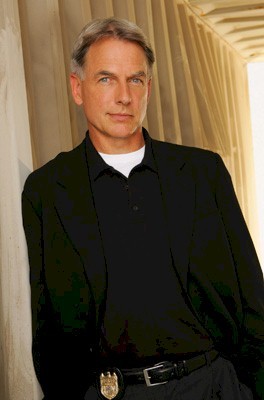
Leroy Jethro Gibbs (NCIS): Ah, Gibbs. I knew I loved him from the moment I heard his preferred method of dealing with politicians was to shoot them (actually, that's his preferred method of dealing with most people, come to think of it). Taciturn, rude, terrible people skills ... Gibbs still manages to win the hearts and loyalty of those who work with him. Probably because along with all those negative traits, he's also fiercely loyal to his people, protective, deeply loving, and almost always right. The NCIS team really is like one big family, and Gibbs is unquestionably the father-figure to them all (well, aside from Ducky, who is most definitely the eccentric great-uncle of the clan). If I were ever in mortal danger, it's Special Agent Gibbs I'd want protecting me.
.jpg)

Here, then, is my list of top five television heroes, with one thrown in as a bonus at the end.
Chakotay (Star Trek: Voyager): Carl and I recently started re-watching the Voyager series (re-watching for me, first time for him - true love!), and I was astounded to discover that it was nowhere near as awesome as I remembered from when I was watching it as a teenager. I mean, the basis is awesome, and the acting is brilliant, but the writing, oh the writing. It's pretty much "The Janeway Show," and none of the other characters really get much development until Seven-of-Nine shows up. Then it's the "Janeway and Seven Show." And that sucks, because really, it could have been so amazing. And Chakotay was one of the most amazing characters on it. A basically kind, gentle man with enormous compassion and such strong ethics, forced by his principles into a life of violence. So much conflict in him, and clashing loyalties, and his rarely-seen but wickedly delightful sense of humor ... yeah, even after all these years, and even with the major issues I now see with Voyager, Chakotay is still one of my all time favorite television heroes.
Leroy Jethro Gibbs (NCIS): Ah, Gibbs. I knew I loved him from the moment I heard his preferred method of dealing with politicians was to shoot them (actually, that's his preferred method of dealing with most people, come to think of it). Taciturn, rude, terrible people skills ... Gibbs still manages to win the hearts and loyalty of those who work with him. Probably because along with all those negative traits, he's also fiercely loyal to his people, protective, deeply loving, and almost always right. The NCIS team really is like one big family, and Gibbs is unquestionably the father-figure to them all (well, aside from Ducky, who is most definitely the eccentric great-uncle of the clan). If I were ever in mortal danger, it's Special Agent Gibbs I'd want protecting me.
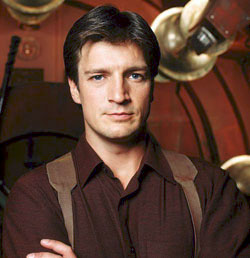
Malcolm Reynolds (Firefly): I hate to admit that I was kind of on the fence regarding Mal at first. It wasn't until the end of the episode "Safe" that I made up my mind on him. When Simon was asking him why Mal came back for Simon and River, Mal says "You're my crew." "Yeah, but you don't even like me," Simon pointed out. "You're my crew," Mal said blankly. "Why are we still talking about this?" And that's when I fell irrevocably in love (not really, Carl). I love Mal's stubborn loyalty, the fact that he will do anything at all to protect his people, whether he likes them or not. The fact that he never, ever gives up, even when he is utterly beaten just adds to his endearing qualities. As someone whose stubbornness goes far beyond reasonable limits (be quiet, Carl), I like seeing that portrayed as a good quality in fictional characters.
Carson Beckett (Stargate: Atlantis): It is entirely possible that much of my fondness for Carson is influenced by his adorable Scottish accent, along with his habit of calling people "son" or "love" or even "wee man" (that last one delivered with killing sarcasm). Mostly why I like him, though, is for his Everyman qualities. In a company made up of scientists, military persons, and administrators, Carson is the one normal guy (though a perfectly brilliant MD in his own right), the one who genuinely cares for everyone, who treats each person as an important individual, who is never too busy with his own tasks to take the time out for others. He's perfectly sweet, and did I mention the Scottish accent?
The Tenth Doctor (Doctor Who): The Ninth Doctor was my first introduction to the show. I'm still tremendously fond of him, but oh, the Tenth Doctor. That unique blend of remarkable kindness and ruthlessness, compassion and cold-bloodedness ... not to mention his delightful sense of humor, his zest for life. His occasional rudeness, usually followed by sheepishness at having been rude adds to his charm. And his loneliness just breaks my heart. Weep, weep! If Gibbs is the person I most want to have my back if I'm in danger, the Tenth Doctor is the one I think would be the most fun to have around when I'm in peril. Even if he caused much of that peril to begin with.

And the promised bonus: Sherlock Holmes, my dream husband.

I expected to like Watson best in the latest BBC adaptation of Sherlock. On the surface, I do like him best. Sherlock is an egotistical maniac, cold-hearted and quite thoroughly amoral, self-described as a "high-functioning sociopath."
And yet ... it was Sherlock that I dreamed was my husband (literally - I dreamed Carl and Sherlock were the same person). It was quite a friendly dream, actually - Sherlock/Carl, John Watson and myself, solving a mystery together, the two of them totally in character, nothing racy or anything I'd be embarrassed to have my mother read on this blog. Sherlock/Carl and I just happened to be quite happily married, as well. And somehow, every time I watch the show, I find myself more drawn to him. No idea why. I've quit trying to analyze that one.

So, in looking over this list, describing the characters, I am indeed seeing a pattern. Ruthlessness when necessary, compassion and kindness, fierce loyalty and protectiveness toward "their" people, and a wry sense of humor. Not exactly the dashing, noble hero of traditional fiction, nor even the typical anti-hero such as Han Solo or Jack Sparrow ... but it works for me. And also explains a lot of the hero-characters I find myself writing!
Who are some of your favorite tv heroes, and why?
Disclaimer: I really don't watch a whole lot of tv. So I'm sure there are some fabulous characters out there that I just haven't discovered. If I left your favorites off, it's not necessarily because I don't like them!
Disclaimer #2: I know there aren't any female characters on here. I'm going to do a post later on with favorite tv female characters. I'm not sure why I separated them, except that maybe that helps me squeeze two posts out of this topic instead of one? Or maybe that it's so much harder to find strong female leads on tv (which is a post in and of itself, but not one that I think I'm fit to tackle), so it's going to take me a bit longer to figure out five that I really love as much as I love the five mentioned here. But I'll get there eventually!
I expected to like Watson best in the latest BBC adaptation of Sherlock. On the surface, I do like him best. Sherlock is an egotistical maniac, cold-hearted and quite thoroughly amoral, self-described as a "high-functioning sociopath."
And yet ... it was Sherlock that I dreamed was my husband (literally - I dreamed Carl and Sherlock were the same person). It was quite a friendly dream, actually - Sherlock/Carl, John Watson and myself, solving a mystery together, the two of them totally in character, nothing racy or anything I'd be embarrassed to have my mother read on this blog. Sherlock/Carl and I just happened to be quite happily married, as well. And somehow, every time I watch the show, I find myself more drawn to him. No idea why. I've quit trying to analyze that one.

"John, stop chattering on this phone - the game's afoot!"
So, in looking over this list, describing the characters, I am indeed seeing a pattern. Ruthlessness when necessary, compassion and kindness, fierce loyalty and protectiveness toward "their" people, and a wry sense of humor. Not exactly the dashing, noble hero of traditional fiction, nor even the typical anti-hero such as Han Solo or Jack Sparrow ... but it works for me. And also explains a lot of the hero-characters I find myself writing!
Who are some of your favorite tv heroes, and why?
Disclaimer: I really don't watch a whole lot of tv. So I'm sure there are some fabulous characters out there that I just haven't discovered. If I left your favorites off, it's not necessarily because I don't like them!
Disclaimer #2: I know there aren't any female characters on here. I'm going to do a post later on with favorite tv female characters. I'm not sure why I separated them, except that maybe that helps me squeeze two posts out of this topic instead of one? Or maybe that it's so much harder to find strong female leads on tv (which is a post in and of itself, but not one that I think I'm fit to tackle), so it's going to take me a bit longer to figure out five that I really love as much as I love the five mentioned here. But I'll get there eventually!
Monday, April 30, 2012
Influences: Terry Brooks
I've always liked the name Will. William seems stodgy to me, and Bill boring (or, as one William I know once put it, "a bill is a duck's mouth, NOT a person's name"), but I do like Will.
I put the responsibility for that squarely on the shoulders of two authors: Susan Cooper, for her fantastic Will Stanton; and Terry Brooks, for Wil Ohmsford of The Elfstones of Shannara.

I still vividly remember finding this book for the first time. It was at our old library, the one we'd been going to since before I was born. I had looked through the entire children's section and realized that I had read, if not all the books, almost all of them, and certainly all the ones that interested me (the Goosebumps books were completely safe from ever being borrowed by me). So, for the first time ever, I crossed the middle of the library into the adult section. I have no idea how old I was.
The above cover was the first thing I saw in the adult section. The very word "elfstones" caught my interest, followed very quickly by the Robin Hood-esque characters pictured. I added it to my pile, brought it home, started reading, and was instantly immersed.
The second Brooks book I read was The Druid of Shannara, which confused me horribly until I realized we were talking two separate Ohmsford generations, here. I didn't care so much about Walker, but I loved all the tidbits about Wren, and, not having Wikipedia at my fingertips back in those days, went back to the library and found all the Shannara books they had and began skimming them, trying to find the one that would tell me more about Wren. I finally found The Elf Queen of Shannara, and as you might have guessed, loved every word. I think I named a character "Wren" in every story I wrote for ages after that. She was awesome.

I put the responsibility for that squarely on the shoulders of two authors: Susan Cooper, for her fantastic Will Stanton; and Terry Brooks, for Wil Ohmsford of The Elfstones of Shannara.

I still vividly remember finding this book for the first time. It was at our old library, the one we'd been going to since before I was born. I had looked through the entire children's section and realized that I had read, if not all the books, almost all of them, and certainly all the ones that interested me (the Goosebumps books were completely safe from ever being borrowed by me). So, for the first time ever, I crossed the middle of the library into the adult section. I have no idea how old I was.
The above cover was the first thing I saw in the adult section. The very word "elfstones" caught my interest, followed very quickly by the Robin Hood-esque characters pictured. I added it to my pile, brought it home, started reading, and was instantly immersed.
The second Brooks book I read was The Druid of Shannara, which confused me horribly until I realized we were talking two separate Ohmsford generations, here. I didn't care so much about Walker, but I loved all the tidbits about Wren, and, not having Wikipedia at my fingertips back in those days, went back to the library and found all the Shannara books they had and began skimming them, trying to find the one that would tell me more about Wren. I finally found The Elf Queen of Shannara, and as you might have guessed, loved every word. I think I named a character "Wren" in every story I wrote for ages after that. She was awesome.

Over time, I've read all of the Shannara books except the short stories and graphic novels (and finally got them all in the right order), and most of the Landover series, too. I also read Sometimes the Magic Works, which is still probably my favorite book on writing, from a writer, ever (I also really love Madeleine L'Engle's A Circle of Quiet, but that's more of a book on life, from a writer, than just a book on writing).
As I've grown and broadened my fantasy horizons, I can see a lot more of the flaws in Brooks' writing than before. He certainly has no shame in utilizing tropes, or in using the same ideas and themes over and over (and over and over). His best books are, I think, his Word & Void books, which are gritty and dark, magic mixing with modern reality in a completely believable (and terrifying) way. The fantasy ones get repetitive after a bit, and I think the ones set in the more "modern" fantasy times (The Voyage of the Jerle Shannara books, and the High Druid books) are his weakest. My personal favorite is still Elfstones, both because it is the first I ever read, and for its characters - Wil, Amberle, Eretria, and Prince Ander.
Brooks is one of those rare writers who combines brilliant world-building with unique and dimensional characters (for the most part. Like I said, the later books get repetitive). And while someone today might dismiss him as following too many tropes, you have to remember that he is directly responsible for some of those things becoming tropes - other writers have copied off of him, turning his originality into tropes.
Sacrifice on a personal level for a greater, impersonal good is a continuing theme woven throughout his works. So is familial love, stronger than any spell. So is the seductive lies of evil contrasted with the harsh reality of good. So is the idea of one person, no matter how seemingly insignificant, refusing to give in to hatred and darkness, and turning the tide of the battle.
Cliches? Maybe. Truths that are important for people to be reminded of, even in fantasy version? Absolutely.
Not all evils can be fought with a sword (or elfstones). But evil can and must be fought every day, in all its various forms, by those who love peace, love goodness, love love itself. And I for one always appreciate the reminder of that I always get in Brooks' works, and try to incorporate some of those truths in all my own works, whether it be the obvious point of the story or simply the truth hidden behind my writing.
Heroes don't always look heroic, but the world needs them just the same.
Friday, November 4, 2011
"She Was Only Anne"
I am not a book reviewer, and this blog is not a review blog. I adore book review blogs. I just don't review very well. I have a hard time being objective, and looking at something as either well-done or poorly-done, instead of "I liked this" or "this irritated the heck out of me."
However. I am re-reading Persuasion for, I don't know, the seventh time? Tenth? I don't keep track of how often I read books, honestly. I know I started reading Austen back in my college days, and have re-read her books many times since. Sense and Sensibility is my least favorite - I would venture so far as to say I rather dislike it, mostly because all the characters are in good need of a Gibbs-head-slap - and my favorite keeps changing throughout the years. Right now, and for a few years, it is Persuasion, followed closely by Emma.
I think Anne Elliot is the best of all Austen's heroines. More depth to her character than Lizzy Bennet, more spirit than Fanny Price, more clarity of vision than Emma Woodhouse, more common sense than Cathy Morland, and more understanding and wisdom than the Dashwood sisters. I love, as I approach my thirtieth year, that she is an older heroine, and one who blossomed later in life instead of early. I love how she shows that gentleness does not equal weakness, just as Louisa Musgrove proves that spiritedness does not equal strength of character.
Captain Wentworth is, I think, a bit of a jerk. He's held a grudge against Anne for years, is deliberately rude to her, and flirts with the Musgrove girls without a care for how he might be affecting them. Yet, he is no Darcy, because we get to see him improve slowly throughout the book - not just changing after he is confronted with his faults, because he wants to be worthy of his love (I really hate the message that sends - that if you love somebody enough, you can change their character flaws. IT DOESN'T WORK THAT WAY OUTSIDE THE MOVIE AND BOOK WORLD). He sees his flaws for himself, recognizes where he has been unjust and acted wrongly, and then moves decisively to correct himself.
And I think that's one reason why Anne and Captain Wentworth are such a good match - they loved each other as youth, were separated and grew up apart from each other, each developing into their own person, and then came back together as fully realized adults, each offering something special to the other, to help make the other complete.
Persuasion is great not just for the MCs, though. The supporting characters are all brilliantly drawn too - Mary Musgrove cracks me up with every re-reading; Admiral and Mrs Croft are delightful; Mr Elliot and Mrs Clay are just the right sort of villains - not too obvious.
Then there is the scenery, and the overall feel of the book. I almost always read Persuasion in the autumn or winter months. It is that sort of book; it feels wrong to read it when it is light and sunny out. With only a few words Austen gives us a clear picture of Kellynch, of Lyme (oh how I want to visit there someday!), and of Bath. Bath comes through even clearer in Persuasion, I think, than in Northanger Abbey.
It shows the mark of being written by an older, experienced author. The pace is calmer, the humor subtler, the tone quieter and deeper than the others. It is, I think, Jane Austen's masterpiece, and I think it a true pity that it is so often overshadowed by the brighter but shallower Pride and Prejudice.
Next up on my fall/winter reading list: Shakespeare and Elizabeth Gaskell! What are you planning on reading this month?
However. I am re-reading Persuasion for, I don't know, the seventh time? Tenth? I don't keep track of how often I read books, honestly. I know I started reading Austen back in my college days, and have re-read her books many times since. Sense and Sensibility is my least favorite - I would venture so far as to say I rather dislike it, mostly because all the characters are in good need of a Gibbs-head-slap - and my favorite keeps changing throughout the years. Right now, and for a few years, it is Persuasion, followed closely by Emma.
I think Anne Elliot is the best of all Austen's heroines. More depth to her character than Lizzy Bennet, more spirit than Fanny Price, more clarity of vision than Emma Woodhouse, more common sense than Cathy Morland, and more understanding and wisdom than the Dashwood sisters. I love, as I approach my thirtieth year, that she is an older heroine, and one who blossomed later in life instead of early. I love how she shows that gentleness does not equal weakness, just as Louisa Musgrove proves that spiritedness does not equal strength of character.
Captain Wentworth is, I think, a bit of a jerk. He's held a grudge against Anne for years, is deliberately rude to her, and flirts with the Musgrove girls without a care for how he might be affecting them. Yet, he is no Darcy, because we get to see him improve slowly throughout the book - not just changing after he is confronted with his faults, because he wants to be worthy of his love (I really hate the message that sends - that if you love somebody enough, you can change their character flaws. IT DOESN'T WORK THAT WAY OUTSIDE THE MOVIE AND BOOK WORLD). He sees his flaws for himself, recognizes where he has been unjust and acted wrongly, and then moves decisively to correct himself.
And I think that's one reason why Anne and Captain Wentworth are such a good match - they loved each other as youth, were separated and grew up apart from each other, each developing into their own person, and then came back together as fully realized adults, each offering something special to the other, to help make the other complete.
Persuasion is great not just for the MCs, though. The supporting characters are all brilliantly drawn too - Mary Musgrove cracks me up with every re-reading; Admiral and Mrs Croft are delightful; Mr Elliot and Mrs Clay are just the right sort of villains - not too obvious.
Then there is the scenery, and the overall feel of the book. I almost always read Persuasion in the autumn or winter months. It is that sort of book; it feels wrong to read it when it is light and sunny out. With only a few words Austen gives us a clear picture of Kellynch, of Lyme (oh how I want to visit there someday!), and of Bath. Bath comes through even clearer in Persuasion, I think, than in Northanger Abbey.
It shows the mark of being written by an older, experienced author. The pace is calmer, the humor subtler, the tone quieter and deeper than the others. It is, I think, Jane Austen's masterpiece, and I think it a true pity that it is so often overshadowed by the brighter but shallower Pride and Prejudice.
Next up on my fall/winter reading list: Shakespeare and Elizabeth Gaskell! What are you planning on reading this month?
Tuesday, September 27, 2011
What Makes A Hero?
In keeping with the recent post on Peter Pevensie (AKA High King Peter the Magnificent - now there's a title to live up to!), which got me thinking again about my Hero and Everyman post, and also with the start of a brand-new season of NCIS:LA this week (yes, aside from figure skating - and by the way, you will probably have to suffer through a post or two on that this winter, because that's just how I roll - the NCIS shows are the only television I really care about anymore. Although I am really, really curious about Once Upon A Time starting in October, given its fairy tale premise), I got thinking about the kind of hero that I have always been drawn to, both in literature and film (and television).
So here you have it.
The type of hero I prefer:
Sam more than Callen (NCIS:LA)
Will more than Jack (Pirates of the Caribbean) (only in the first, though, because then Will just got irritating and Jack got immensely more charming)
Faramir more than Boromir (Lord of the Rings)
Mr Knightley (or Henry Tilney) more than Mr Darcy or Captain Wentworth (Jane Austen's novels)
Etc, etc.
Not necessarily the squeaky-clean, never had any faults (like Peter) hero, but the one who isn't angsting all over the place, the one who is truly good, the one who knows what is right and strives to do it. Not so much the tortured anti-hero for me. One of my chief complaints about the LotR films was the changes they made to Boromir and Faramir's characters - how they made Boromir, the weak one, seem more heroic, and turned Faramir, who was strong and just and good, into somebody who was weak and willing to do almost anything to earn his father's approval. GRRR.
I think that's one reason I like Edmund so much in the Narnia books, because we get to see his journey from the most un-heroic beginning to a man who is confident in what is right, and acts upon it without much inner anguish or tortured questioning or intense struggles between what he wants and what he should do.
(Unless, of course, you are reading much of the Narnia fanfiction out there, where Edmund spends the rest of his life beating himself up for his temporary alliance with the Witch. GRRR again.)
Taran, from Lloyd Alexander's Prydain Chronicles, is another similar character - one who starts out with foolish ideas about what a hero is, and grows to be a quiet and unassuming hero of his own without even realizing it.
This applies to heroines as well, of course. I have mentioned before about my fondness for Cecy and Kate of the Sorcery & Cecilia books by Patricia Wrede and Caroline Stevermer. There are two girls who are confident in what is right, and able to act upon it. Granted, their actions often stir up yet more trouble, but that just adds to the fun. And it's not over-confidence, either - don't get me wrong. I'm not a fan of the smug, or even the one who never questions. I think that's why I liked Will so much in the first PotC movie - when his sense of rightness clashed with "the rules" he'd always lived by, he had to undergo a struggle to determine which was stronger - his instinct for justice, or what he'd always believed. Which made his decision in the end far more cheer-worthy.
Or Sam, from NCIS:LA - though it tore at him to break away from NCIS in last season's finale, to walk away from the structure he lived by, it was more important to help his friends (and save Hetty). If Callen hadn't walked away first, would Sam have done so? I'm not sure, but once Callen did, Sam had to back up his friend and partner.
And that is awesome stuff, and to me, the sort of thing that makes a hero (or heroine) truly interesting, and truly worth emulating.
What sort of heroes do you prefer - the tortured ones, the ones suffering from a lot of inner angst, the anti-hero like Captain Jack Sparrow, or the simpler heroes, like Sam and Faramir, etc? I think there's a lot to be said for all kinds, and I'm always interested to hear where other people differ from my preferences - it helps me broaden my writing repertoire as well as gives me stuff to chew on personally! Also, when it comes to Jane Austen heroes, am I the only one who thinks that Mr Darcy remains something of a bore even after his change, and that Mr Knightley is one of the greatest heroes in literature (I know Rockinlibrarian agrees with me on Henry Tilney's swoon-worthiness, at least!)?
So here you have it.
The type of hero I prefer:
Sam more than Callen (NCIS:LA)
Will more than Jack (Pirates of the Caribbean) (only in the first, though, because then Will just got irritating and Jack got immensely more charming)
Faramir more than Boromir (Lord of the Rings)
Mr Knightley (or Henry Tilney) more than Mr Darcy or Captain Wentworth (Jane Austen's novels)
Etc, etc.
Not necessarily the squeaky-clean, never had any faults (like Peter) hero, but the one who isn't angsting all over the place, the one who is truly good, the one who knows what is right and strives to do it. Not so much the tortured anti-hero for me. One of my chief complaints about the LotR films was the changes they made to Boromir and Faramir's characters - how they made Boromir, the weak one, seem more heroic, and turned Faramir, who was strong and just and good, into somebody who was weak and willing to do almost anything to earn his father's approval. GRRR.
I think that's one reason I like Edmund so much in the Narnia books, because we get to see his journey from the most un-heroic beginning to a man who is confident in what is right, and acts upon it without much inner anguish or tortured questioning or intense struggles between what he wants and what he should do.
(Unless, of course, you are reading much of the Narnia fanfiction out there, where Edmund spends the rest of his life beating himself up for his temporary alliance with the Witch. GRRR again.)
Taran, from Lloyd Alexander's Prydain Chronicles, is another similar character - one who starts out with foolish ideas about what a hero is, and grows to be a quiet and unassuming hero of his own without even realizing it.
This applies to heroines as well, of course. I have mentioned before about my fondness for Cecy and Kate of the Sorcery & Cecilia books by Patricia Wrede and Caroline Stevermer. There are two girls who are confident in what is right, and able to act upon it. Granted, their actions often stir up yet more trouble, but that just adds to the fun. And it's not over-confidence, either - don't get me wrong. I'm not a fan of the smug, or even the one who never questions. I think that's why I liked Will so much in the first PotC movie - when his sense of rightness clashed with "the rules" he'd always lived by, he had to undergo a struggle to determine which was stronger - his instinct for justice, or what he'd always believed. Which made his decision in the end far more cheer-worthy.
Or Sam, from NCIS:LA - though it tore at him to break away from NCIS in last season's finale, to walk away from the structure he lived by, it was more important to help his friends (and save Hetty). If Callen hadn't walked away first, would Sam have done so? I'm not sure, but once Callen did, Sam had to back up his friend and partner.
And that is awesome stuff, and to me, the sort of thing that makes a hero (or heroine) truly interesting, and truly worth emulating.
What sort of heroes do you prefer - the tortured ones, the ones suffering from a lot of inner angst, the anti-hero like Captain Jack Sparrow, or the simpler heroes, like Sam and Faramir, etc? I think there's a lot to be said for all kinds, and I'm always interested to hear where other people differ from my preferences - it helps me broaden my writing repertoire as well as gives me stuff to chew on personally! Also, when it comes to Jane Austen heroes, am I the only one who thinks that Mr Darcy remains something of a bore even after his change, and that Mr Knightley is one of the greatest heroes in literature (I know Rockinlibrarian agrees with me on Henry Tilney's swoon-worthiness, at least!)?
Tuesday, September 20, 2011
Peter vs Peter
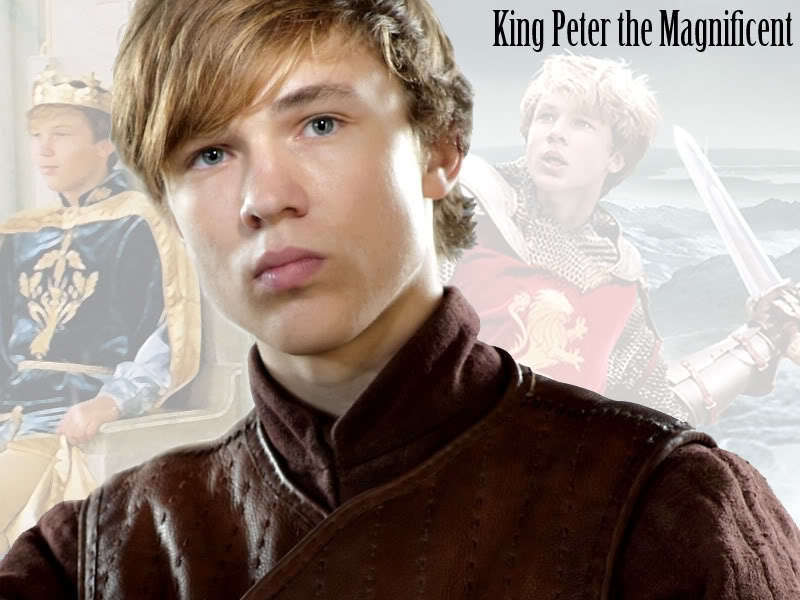
Because sulkiness is so much more magnificent than nobility
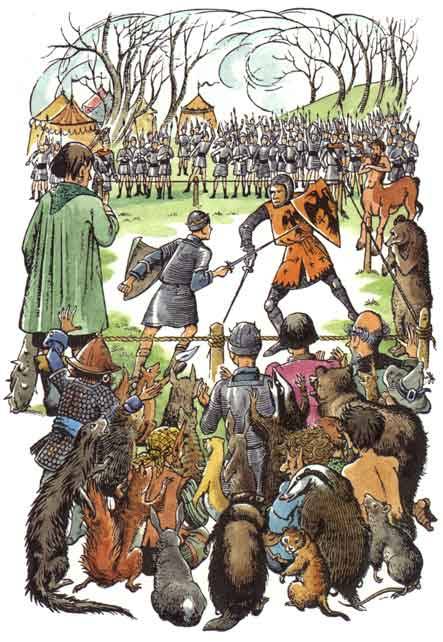
And a hero without angst is like romance without kissing in the rain.
Don't mistake me: I think William Moseley is an excellent actor. And I thoroughly enjoyed his performance in The Lion, The Witch, And The Wardrobe. And taking Prince Caspian as a movie on its own merits, apart from the book, he played his role well.
But he just wasn't - couldn't possibly be - High King Peter the Magnificent. King Peter, who tells the unsure and humble Prince Caspian (I also quite like Ben Barnes, but oh! his Caspian was almost as poor a representation of the book's character as Peter) first thing "We haven't come to take your throne, you know, but to put you in it." Who never questioned Aslan's choice in sending them back to England, then bringing them to Narnia only for a short time. Who loved deeply, and was not ashamed of it; who mourned deeply and was equally unashamed. Who was noble, and just, and courageous, pretty much everything a traditional hero of medieval literature was supposed to be - just look at Malory's King Arthur, and the knights of the Round Table, sometime.
And yes, I understand that all of those traits don't translate well to a modern-day movie-going audience. Remember my old post on Hero and Everyman? It's the Everyman most movies promote, not the Hero. Not anymore. People's tastes have shifted. And that's okay, for the most part, because Everyman is important, too - especially when, as Rockinlibrarian pointed out on that post, the Everyman does the heroic (SAM!).
But still. We could have done with less angst - or with angst over a different matter. Instead of the selfish "me me me why did Aslan send me back I was king I want to be king again why doesn't anyone take me seriously wahhhh," it could have been more along the lines of "what happened to Narnia why are these interlopers here what do you mean the beavers are extinct they were my friends Narnia is in my blood and it is hurting which makes me hurt and England is cold and unfriendly and I can't find my footing." And then, of course, he could have learned while in Narnia how to search beneath the surface to find the warmth and joy that still existed, and to decide to seek out the same in England, which is why he was suddenly fit to return to England for good, because Narnia had taught him what he needed to know.
You could even have worked in the tension between him and Caspian, if necessary - in that Peter has a hard time entrusting his land, his people (and trees, and Animals, and Others), to a descendent of those who silenced the land's song to begin with, but in time sees that Caspian is different, and puts aside his prejudices to give the young prince a chance.
Instead, we got stereotypes. Oh, we got stereotypes. And a very, very 2000s outlook from a character who lived in the 1940s. Which, I think, is what my frustration boils down to - it's all very well and good to have a relatable character, but when you start acting like those characters live in this era, but still set them in a former, you've started to skew history, and project your own way of thinking backward, and nothing infuriates me more than that.
(Well, okay, a few things do, but it's on my top ten list.)
So frustrating. Because Peter, as written, is a marvelous Hero, one to look up to, one to strive toward. After all, that was the point of the chivalric tales in medieval days, wasn't it? To give people an Ideal? And I think it's a shame that they tore that away from Peter in the movie and turned him into a sullen, resentful, bitter, stupid teenage boy.
Oh well. At least we still got this out of the whole thing:

I know it's a few years old now, but what did you think of the Prince Caspian movie? Does it bother you when movies change the inherent character of people in books? Do you think it is a mistake to impose today's values and mindsets onto characters from past eras, to make them more relatable, or is that just a natural side effect of historical fiction (movie or book)? Do you mourn the lack of Ideal in today's fiction?
Wednesday, June 1, 2011
My Favorite Literary Couple

Betsy Ray and Joe Willard are one of my all-time favorite literary couples. I love everything about them, from their first meeting in "Heaven to Betsy," to the absolutely lovely recounting of the first years of their marriage in "Betsy's Wedding."
I've wondered sometimes what makes me like them even more than most classic couples, such as, say, Anne and Gilbert

Or Elizabeth and Mr Darcy

Or even Taran and Eilonwy (a classic couple for fans of YA Fantasy)
I even like them a little bit better than Molly Gibson and Roger Hamley, which is shocking.

But there you have it. For some reason, Betsy and Joe just stand out above the rest for me. After thinking about it, I've come up with a few reasons why:
(Note: I'm not saying that none of the other couples I mentioned don't have all these traits, just not all together, like Betsy and Joe)
- Joe really respects Betsy. He doesn't just adore her without thinking of her as a person, or think her perfection without recognizing her human flaws, or worship the ground she walks on without acknowledging that she has a brain. He respects her as a person, a human being, and he doesn't try to shelter, coddle, or protect her. He critiques her writing honestly, and tells her real ways she can improve it. He is fiercely competitive in the first three years of their high school writing rivalry, but it is always a friendly competition.
- Although Betsy and Joe meet when they are fourteen, it is not at all certain they will end up together by the end of the series. There is an obvious attraction there, but while the reader hopes they will act on it, between their own stubbornness and outside influences, one can't be at all sure. So that, when they do end up together, there is simultaneously a sense of "Of course!" and "Whew!"
- (and somewhat connected to 2) Because we get to see Betsy with SO many other boys, and Joe with at least one other girl, we are able to see even more clearly how perfect they are for each other, in contrast with all the other romances they've had.
- They are neither best friends nor bitter enemies. Nor do either of them think of the other as a sibling, while the other is hopelessly in love. Thank goodness!
- They don't start dating (or courting, I suppose, given the era) and immediately get engaged and then married and everything is perfect. We get to see them continue to quarrel and make up, and even to break up for a time. Things aren't perfect after they are married, either, but they meet every challenge with love and humor, and it makes them so human. In fact, everything about them is human and realistic, while still romantic enough to make the reader swoon.
So there you have it! My top five reasons why I love Betsy and Joe so much. All good things to keep in mind, for me, when writing romance between my own characters.
Who is your favorite literary couple? What are some things that you love in a literary romance, and what are some things you hate? Out of the five couples I mentioned, which do you like the best? Don't you love Vera Neville's illustrations for the Betsy-Tacy books?
Saturday, May 14, 2011
Hero and Everyman
First of all, let me apologize to everyone who has posted a comment since Tuesday evening. Apparently Blogger's "hiccup" yesterday caused it to lose all comments made on Wednesday and beyond. Grr. We had some interesting stuff going, too!
And now, on to the actual post:
Watching NCIS:LA (yes, I watch both NCIS and NCIS:LA; and no, it's not just for the eye candy (although that doesn't hurt)) this week, I was struck anew at the difference between the Hero and the Everyman, and how both are vital to tell a compelling story.
Ha! Bet you didn't know one could get such revelations from NCIS, did you?
In brevis, the Hero is someone we aspire to. He or she is the one we admire, the one who shows the most praise-worthy traits, the one who gives us an example and makes us yearn to be better.
The Everyman is someone we can relate to. He or she is the one we feel akin to, we understand, we wince in sympathy, and as he or she interacts with the Hero, we get a sense of how we would interact as well. The Everyman makes the story real and personal.
Hollywood, in general, seems to get this confused. They try to make the Hero and the Everyman the same character. This might work in a few cases, but usually just ends up leaving the audience with nothing and no one to aspire to. We, as a society, need True Heroes. Tortured heroes, after a while, get old.
Many high fantasies have the opposite problem. They have the Hero with no Everyman, which leaves the audience feeling disconnected. We as humans need someone to relate to, as well.
A good example of how this works well can be seen in the Chronicles of Narnia. In Peter, we have the Hero. One of the biggest gripes you will hear from fanfic writers is that Peter is impossible to write realistically, because he has no flaws. That's not because he is a "Gary Stu,"but because he is a Hero. He's the one everyone looks up to and want to be like.
The Everyman? Well, he goes by the unfortunate name of Eustace Clarence Scrubb, and when we first meet him, Lewis tells us he "almost deserved" his name. Poor Eustace is a nuisance, a pest, hates and is secretly jealous of his noble cousins, and even after he is changed still maintains his Everyman status. In The Silver Chair Trumpkin the Dwarf can't even get his name right, first calling him "Useless," and then wanting to know just how he is "Used to it." When the Prince, Puddleglum, and Eustace fight the serpent, we are told that Eustace's blow lands on the body and skitters off the scales without doing any good. He thoroughly enters into every adventure, but doesn't have any special skill that makes him unique or special.
By The Last Battle he has grown, even to the point where he can fight alongside the King (another Hero), but he is still the Everyman, just doing his best with his limited abilities. It is Jill who has the special ability to move almost unseen through the woods, Jill who rescues Puzzle, Jill who is the lone archer during that last battle, where Eustace is the first one captured and thrown in the stable. Eustace is never made a king, unlike his cousins. He is never referred to as "lord," as Digory is (and both Polly and Jill, it seems, become "Lady" without any difficulty in the matter). He is just Eustace throughout, growing into a loyal Friend of Narnia, and giving his all without ever having anything special to give.
(In case you can't tell, Eustace is my absolute favorite character from the Narnia series.)
In NCIS:LA, which started this whole train of thought, Callen and Sam act as the Heroes (Sam as the True Hero; Callen gets to be the Tragic Hero). The rest of the team is heroic in its own way, too, and it isn't until Deeks comes along from the LAPD that we get a more human character. Deeks is brave enough, and good at his job, but he isn't exactly the super-dooper expert at anything like the rest. He even looks more ordinary: scruffy, regular build, etc. Through his interaction with the team, and how he slowly integrates with them and develops his own set of skills has been one of the reasons I keep watching the show. That, and it's fun to watch things blow up.
There are, of course, a lot of ways you can play with The Hero and Everyman roles, to expand them a bit. Take Tolkein's Lord of the Rings as a classic example. There you have:
Aragorn - True Hero
Boromir - Guy who thinks he's the hero, but weakly gives in to temptation.
Faramir - Guy who also thinks Boromir's the hero (and he isn't), but doesn't give in to temptation, thus qualifying himself for the role of Lesser Hero.
Frodo - Everyman who grows into the Hero by the end. Those are also becoming more common (and one of my favorite characters to write), and are also important for humans - because we need to see that ordinary people can grow to do extraordinary things.
Sam - Everyman
Then, of course, you have Eowyn (I think Eomer comes under the Lesser Hero category), who plays a similar role to Edmund in the Chronicles of Narnia. They both start out wanting to be the True Hero, but by the end have accepted a subordinate role quite happily - Eowyn as a Healer and wife to the Steward, and Edmund as ruler equal to his sisters, and under his brother. Lucy and Susan, in CoN, have their own roles as well, of course, but those are slightly harder to define. Lucy is Inspiration, and Hero, and Joy, and Faith, and ... well, she's Lucy. Susan is more akin to Boromir (HEY - fanfic crossover with a Susan/Boromir pairing, anyone?), in that she starts out heroically but gives in to her weak points. Unlike Boromir, who dies for his transgressions, we are allowed to hope, at the end of the CoN, that Susan may yet repent and attain the role of Restored Hero.
To return to the initial idea of Hero and Everyman - I think it helps, as a writer, to define these roles. Not that your characters have to fit exactly into a mold, but in a world where anti-heroes are frighteningly popular, and the everyman, if he exists in the story at all, is either a joke or a cynic, I think it is important to remember why these types of characters are so enduring. As I said in the beginning: We need to have someone to aspire to, and we need someone to relate to. Those two desires are part of what makes us human, and it's part of what most stories, I think, are trying to tap.
After all, there's a reason why classic hero stories are classic. There's a reason why NCIS and NCIS:LA are so incredibly popular.
It's because they touch on the universal needs and desires we all share, to have a hero, and to try to grow into one ourselves, even though we are just ordinary people.
Are there other great examples of Hero and Everyman in literature or television/movies I missed? I know I only touched on a couple. Who is one of your favorite Hero characters, and one of your favorite Everyman characters? Do you think my understanding of why these characters are so important is accurate, or would you disagree? What are some other characters that are important to us as humans? And are you a fan of the NCIS shows, too?
And now, on to the actual post:
Watching NCIS:LA (yes, I watch both NCIS and NCIS:LA; and no, it's not just for the eye candy (although that doesn't hurt)) this week, I was struck anew at the difference between the Hero and the Everyman, and how both are vital to tell a compelling story.
Ha! Bet you didn't know one could get such revelations from NCIS, did you?
In brevis, the Hero is someone we aspire to. He or she is the one we admire, the one who shows the most praise-worthy traits, the one who gives us an example and makes us yearn to be better.
The Everyman is someone we can relate to. He or she is the one we feel akin to, we understand, we wince in sympathy, and as he or she interacts with the Hero, we get a sense of how we would interact as well. The Everyman makes the story real and personal.
Hollywood, in general, seems to get this confused. They try to make the Hero and the Everyman the same character. This might work in a few cases, but usually just ends up leaving the audience with nothing and no one to aspire to. We, as a society, need True Heroes. Tortured heroes, after a while, get old.
Many high fantasies have the opposite problem. They have the Hero with no Everyman, which leaves the audience feeling disconnected. We as humans need someone to relate to, as well.
A good example of how this works well can be seen in the Chronicles of Narnia. In Peter, we have the Hero. One of the biggest gripes you will hear from fanfic writers is that Peter is impossible to write realistically, because he has no flaws. That's not because he is a "Gary Stu,"but because he is a Hero. He's the one everyone looks up to and want to be like.
The Everyman? Well, he goes by the unfortunate name of Eustace Clarence Scrubb, and when we first meet him, Lewis tells us he "almost deserved" his name. Poor Eustace is a nuisance, a pest, hates and is secretly jealous of his noble cousins, and even after he is changed still maintains his Everyman status. In The Silver Chair Trumpkin the Dwarf can't even get his name right, first calling him "Useless," and then wanting to know just how he is "Used to it." When the Prince, Puddleglum, and Eustace fight the serpent, we are told that Eustace's blow lands on the body and skitters off the scales without doing any good. He thoroughly enters into every adventure, but doesn't have any special skill that makes him unique or special.
By The Last Battle he has grown, even to the point where he can fight alongside the King (another Hero), but he is still the Everyman, just doing his best with his limited abilities. It is Jill who has the special ability to move almost unseen through the woods, Jill who rescues Puzzle, Jill who is the lone archer during that last battle, where Eustace is the first one captured and thrown in the stable. Eustace is never made a king, unlike his cousins. He is never referred to as "lord," as Digory is (and both Polly and Jill, it seems, become "Lady" without any difficulty in the matter). He is just Eustace throughout, growing into a loyal Friend of Narnia, and giving his all without ever having anything special to give.
(In case you can't tell, Eustace is my absolute favorite character from the Narnia series.)
In NCIS:LA, which started this whole train of thought, Callen and Sam act as the Heroes (Sam as the True Hero; Callen gets to be the Tragic Hero). The rest of the team is heroic in its own way, too, and it isn't until Deeks comes along from the LAPD that we get a more human character. Deeks is brave enough, and good at his job, but he isn't exactly the super-dooper expert at anything like the rest. He even looks more ordinary: scruffy, regular build, etc. Through his interaction with the team, and how he slowly integrates with them and develops his own set of skills has been one of the reasons I keep watching the show. That, and it's fun to watch things blow up.
There are, of course, a lot of ways you can play with The Hero and Everyman roles, to expand them a bit. Take Tolkein's Lord of the Rings as a classic example. There you have:
Aragorn - True Hero
Boromir - Guy who thinks he's the hero, but weakly gives in to temptation.
Faramir - Guy who also thinks Boromir's the hero (and he isn't), but doesn't give in to temptation, thus qualifying himself for the role of Lesser Hero.
Frodo - Everyman who grows into the Hero by the end. Those are also becoming more common (and one of my favorite characters to write), and are also important for humans - because we need to see that ordinary people can grow to do extraordinary things.
Sam - Everyman
Then, of course, you have Eowyn (I think Eomer comes under the Lesser Hero category), who plays a similar role to Edmund in the Chronicles of Narnia. They both start out wanting to be the True Hero, but by the end have accepted a subordinate role quite happily - Eowyn as a Healer and wife to the Steward, and Edmund as ruler equal to his sisters, and under his brother. Lucy and Susan, in CoN, have their own roles as well, of course, but those are slightly harder to define. Lucy is Inspiration, and Hero, and Joy, and Faith, and ... well, she's Lucy. Susan is more akin to Boromir (HEY - fanfic crossover with a Susan/Boromir pairing, anyone?), in that she starts out heroically but gives in to her weak points. Unlike Boromir, who dies for his transgressions, we are allowed to hope, at the end of the CoN, that Susan may yet repent and attain the role of Restored Hero.
To return to the initial idea of Hero and Everyman - I think it helps, as a writer, to define these roles. Not that your characters have to fit exactly into a mold, but in a world where anti-heroes are frighteningly popular, and the everyman, if he exists in the story at all, is either a joke or a cynic, I think it is important to remember why these types of characters are so enduring. As I said in the beginning: We need to have someone to aspire to, and we need someone to relate to. Those two desires are part of what makes us human, and it's part of what most stories, I think, are trying to tap.
After all, there's a reason why classic hero stories are classic. There's a reason why NCIS and NCIS:LA are so incredibly popular.
It's because they touch on the universal needs and desires we all share, to have a hero, and to try to grow into one ourselves, even though we are just ordinary people.
Are there other great examples of Hero and Everyman in literature or television/movies I missed? I know I only touched on a couple. Who is one of your favorite Hero characters, and one of your favorite Everyman characters? Do you think my understanding of why these characters are so important is accurate, or would you disagree? What are some other characters that are important to us as humans? And are you a fan of the NCIS shows, too?
Subscribe to:
Posts (Atom)