Showing posts with label characters. Show all posts

Monday, April 8, 2013

The Rules

I was reading The Secret Adversary for about the millionth time this weekend, and when I got to the part where Tommy acted completely out of character, I had to stop and ponder it for a few moments.

James Warwick as Tommy Beresford

I love that part. It's one of my favorites. Sober, steady, practical Tommy acts completely impulsively, and it's way better than if the same action was taken by Tuppence, who is KNOWN for her impulsiveness.

Now, most of the time, when a character does something completely foreign to their personality, it drives me nuts. So why does it work so well for Tommy?

I think it's because Christie, as the narrator (she's not quite an omniscient narrator in this one, but it's definitely not a tight third-person POV) acknowledges that he's acting OOC, and so does Tommy himself. I also think it's because it really does happen, in real life, that the predictable steady people DO occasionally get wild impulses, and give into them without understanding the why or the how of it. So even though it's OOC, it's still believable, and it makes for a great scene, and builds up to some that are even better.

I like reading authors like Christie, who wrote before the era of "Rules for Writing," and wouldn't have cared a fig for them if she did (she scatters adverbs wildly) (haha - get it? Wildly? OK, I'm done). She wrote according to her own internal rules, and she never broke them, and it shows.

I break a lot of the so-called Rules in my own writing. But I have a set of my own rules, and the few times I've tried (guiltily) to break them, it makes a mess. And sometimes when I start to fret about The Rules, I remind myself of Christie, and then I feel better. Not that I'm the genius she was! But like her, my rules are more important to follow than The Rules.

As long as you understand what you're doing and why, and you are doing it deliberately, I think The Rules should go out the window.

Where do you stand on the matter?

Tuesday, June 12, 2012

Television Heroines

As promised, the companion post to my piece on favorite tv heroes. This time, it's all about the ladies! Without further ado, I present my top five favorite tv heroines.

Lorelai Gilmore, Gilmore Girls: Oddly enough, I never really liked Rory on this show. You'd think I would, right? Quiet, bookish, ambitions of writing ... yet I always felt like she came across as this spoiled, pampered little princess who assumed everything would go her way and couldn't handle it when life got a bit difficult. Lorelai, on the other hand, is the kind of mom I can only dream about being. She's fun and loving and kind and savvy and present (not just physically, but wholly); she's not perfect but she never quits trying; she has a life of her own but still always puts her kid first. And she has great hair and a razor-sharp wit. Yep, pretty awesome.


Zoe Washburne, Firefly: I love Zoe. I want to be Zoe when I grow up. She is a rarity in television, an action heroine who is also happily married. Her combination of deadly combat skills, fierce loyalty, dry wit, and loving fidelity is amazing. Plus she gets awesome one-liners. My mom likes River the best, and I know a lot of people really love Kaylee (and don't get me wrong, I like both of them, too - I think Kaylee would make a terrific best friend), but for me, it's all about Zoe. She's strong and still human, and that's hard to find in any kind of heroine these days, television or literary; most are either all strength and no human emotions, or all vulnerability and weakness with a side helping of unrealistic warrior skills. Not Zoe. I also really love the fact that she's a sci-fi action heroine who does not spend the entirety of the show running around half-dressed. And she's a really, really good shot.


Captain Kathryn Janeway, Star Trek: Voyager: I know I complained in my heroes post about the fact that Voyager focused almost solely on Captain Janeway ... but that doesn't take away from the fact that she's still a fantastic character. A female starship captain who never exhibits any signs of belligerence or insecurity toward the men under her command, or the other officers in Starfleet; a leader thrown with a totally unconventional crew across the galaxy, trying to get them home without ever going against her principles; a captain trying to maintain protocol with the crew while still providing them with the stability and comfort they need; an explorer faced with unprecedented challenges ... as long as she had her coffee, Janeway took everything in her stride and faced it with humor and dignity. 


Detective Kate Beckett, Castle: I only recently started watching Castle, and so far have only made it through Season 1. Season 2 should be coming to me through inter-library loan any day now. (edit: just picked it up from the library. can't wait to start watching.) So I'm not sure how Beckett's character developed in later seasons, but based on Season 1, I think she's fabulous. She's tough but compassionate, which I love in any character, male or female. She doesn't take any nonsense from anyone. I love watching her get the best of Castle in any of their exchanges, and the developing friendship (which I know from things I've read turns to romance later, but is really great as a friendship, too) between them is so much fun to watch. 


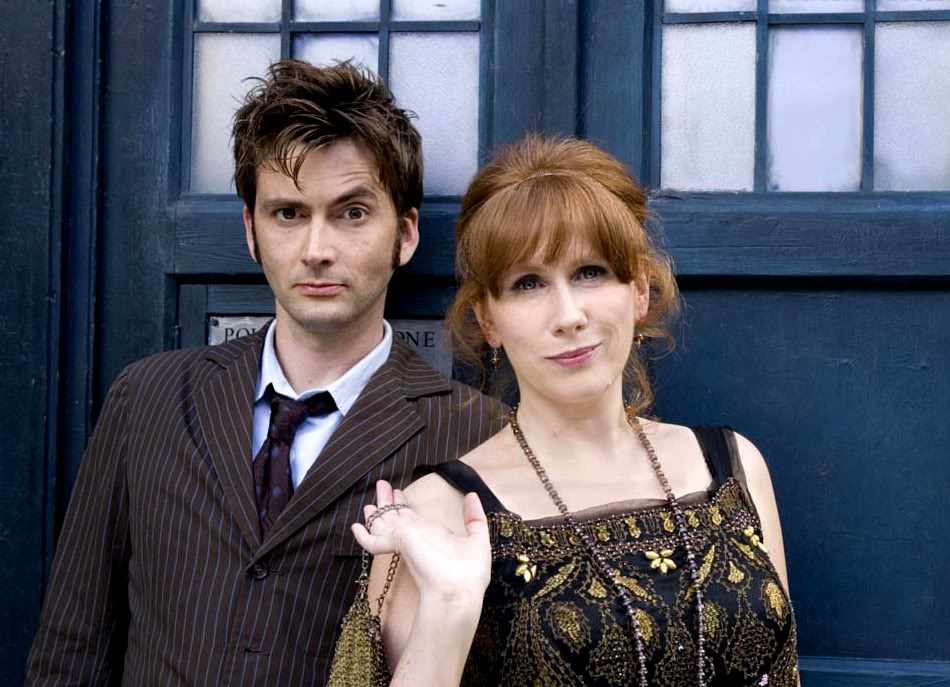
Donna Noble, Doctor Who: This one is kind of cheating. Donna's not technically one of the stars of this show, more of a supporting character (and that only for one season, weep, weep) ... but I love her so much that I don't care. I really liked Rose; I would have liked Martha if she hadn't let her inferiority complex turn her into such a drip; I loved Sarah Jane in the one episode of the new series (no, I haven't watched any of the classic series, and Netflix doesn't have The Sarah Jane Adventures, so I need to start borrowing those from the library too before I can know more about her); but Donna has turned out to be my favorite so far (I'm in the middle of Series 4). She's the perfect foil for the Doctor, in her humor and compassion and strength. She's not in love with him (thank goodness!) but their friendship is so, so strong, and they both grow and gain so much from the other. I even love her abrasiveness, the fact that she doesn't take any crap from anyone. Her relationship with her grandfather is just icing on the cake. I know how her story arc ends (yes, I read spoilers, especially when I'm watching old seasons of a show), and I'm finding myself really reluctant to finish watching Series 4, because I don't want to leave her behind. Well, I don't really want to say goodbye to the Tenth Doctor, either, if I'm being perfectly honest.

donna2.jpg

It seems that my favorite female characters share the same traits I admire most in male characters - strength blended with compassion, the ability to stand up for themselves and for others, loyalty, a ready wit, and a thorough love for adventure. Being ready and willing to take out the bad guy doesn't hurt, either.

Thursday, May 10, 2012

Television Heroes

I've done a list of my favorite literary heroes, but never of favorite tv heroes. Silly me! Lately I've been looking at the rather disparate list of characters I love on tv, and trying to figure out what it is about them that draws me - whether there is one common theme, or if I like each for completely different reasons. So then, naturally, I decided to blog about it.

Here, then, is my list of top five television heroes, with one thrown in as a bonus at the end.

Chakotay (Star Trek: Voyager):  Carl and I recently started re-watching the Voyager series (re-watching for me, first time for him - true love!), and I was astounded to discover that it was nowhere near as awesome as I remembered from when I was watching it as a teenager. I mean, the basis is awesome, and the acting is brilliant, but the writing, oh the writing. It's pretty much "The Janeway Show," and none of the other characters really get much development until Seven-of-Nine shows up. Then it's the "Janeway and Seven Show." And that sucks, because really, it could have been so amazing. And Chakotay was one of the most amazing characters on it. A basically kind, gentle man with enormous compassion and such strong ethics, forced by his principles into a life of violence. So much conflict in him, and clashing loyalties, and his rarely-seen but wickedly delightful sense of humor ... yeah, even after all these years, and even with the major issues I now see with Voyager, Chakotay is still one of my all time favorite television heroes.

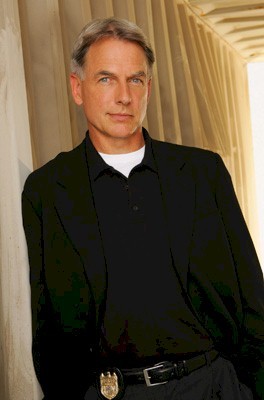
Leroy Jethro Gibbs (NCIS): Ah, Gibbs. I knew I loved him from the moment I heard his preferred method of dealing with politicians was to shoot them (actually, that's his preferred method of dealing with most people, come to think of it). Taciturn, rude, terrible people skills ... Gibbs still manages to win the hearts and loyalty of those who work with him. Probably because along with all those negative traits, he's also fiercely loyal to his people, protective, deeply loving, and almost always right. The NCIS team really is like one big family, and Gibbs is unquestionably the father-figure to them all (well, aside from Ducky, who is most definitely the eccentric great-uncle of the clan). If I were ever in mortal danger, it's Special Agent Gibbs I'd want protecting me.

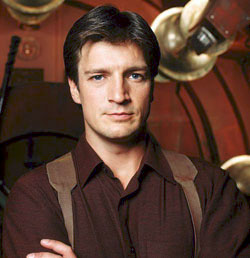
Malcolm Reynolds (Firefly): I hate to admit that I was kind of on the fence regarding Mal at first. It wasn't until the end of the episode "Safe" that I made up my mind on him. When Simon was asking him why Mal came back for Simon and River, Mal says "You're my crew." "Yeah, but you don't even like me," Simon pointed out. "You're my crew," Mal said blankly. "Why are we still talking about this?" And that's when I fell irrevocably in love (not really, Carl). I love Mal's stubborn loyalty, the fact that he will do anything at all to protect his people, whether he likes them or not. The fact that he never, ever gives up, even when he is utterly beaten just adds to his endearing qualities. As someone whose stubbornness goes far beyond reasonable limits (be quiet, Carl), I like seeing that portrayed as a good quality in fictional characters.

Carson Beckett (Stargate: Atlantis): It is entirely possible that much of my fondness for Carson is influenced by his adorable Scottish accent, along with his habit of calling people "son" or "love" or even "wee man" (that last one delivered with killing sarcasm). Mostly why I like him, though, is for his Everyman qualities. In a company made up of scientists, military persons, and administrators, Carson is the one normal guy (though a perfectly brilliant MD in his own right), the one who genuinely cares for everyone, who treats each person as an important individual, who is never too busy with his own tasks to take the time out for others. He's perfectly sweet, and did I mention the Scottish accent?

The Tenth Doctor (Doctor Who): The Ninth Doctor was my first introduction to the show. I'm still tremendously fond of him, but oh, the Tenth Doctor. That unique blend of remarkable kindness and ruthlessness, compassion and cold-bloodedness ... not to mention his delightful sense of humor, his zest for life. His occasional rudeness, usually followed by sheepishness at having been rude adds to his charm. And his loneliness just breaks my heart. Weep, weep! If Gibbs is the person I most want to have my back if I'm in danger, the Tenth Doctor is the one I think would be the most fun to have around when I'm in peril. Even if he caused much of that peril to begin with.

And the promised bonus: Sherlock Holmes, my dream husband.


I expected to like Watson best in the latest BBC adaptation of Sherlock. On the surface, I do like him best. Sherlock is an egotistical maniac, cold-hearted and quite thoroughly amoral, self-described as a "high-functioning sociopath."

And yet ... it was Sherlock that I dreamed was my husband (literally - I dreamed Carl and Sherlock were the same person). It was quite a friendly dream, actually - Sherlock/Carl, John Watson and myself, solving a mystery together, the two of them totally in character, nothing racy or anything I'd be embarrassed to have my mother read on this blog. Sherlock/Carl and I just happened to be quite happily married, as well. And somehow, every time I watch the show, I find myself more drawn to him. No idea why. I've quit trying to analyze that one.

"John, stop chattering on this phone - the game's afoot!"


So, in looking over this list, describing the characters, I am indeed seeing a pattern. Ruthlessness when necessary, compassion and kindness, fierce loyalty and protectiveness toward "their" people, and a wry sense of humor. Not exactly the dashing, noble hero of traditional fiction, nor even the typical anti-hero such as Han Solo or Jack Sparrow ... but it works for me. And also explains a lot of the hero-characters I find myself writing!

Who are some of your favorite tv heroes, and why?

Disclaimer: I really don't watch a whole lot of tv. So I'm sure there are some fabulous characters out there that I just haven't discovered. If I left your favorites off, it's not necessarily because I don't like them! 


Disclaimer #2: I know there aren't any female characters on here. I'm going to do a post later on with favorite tv female characters. I'm not sure why I separated them, except that maybe that helps me squeeze two posts out of this topic instead of one? Or maybe that it's so much harder to find strong female leads on tv (which is a post in and of itself, but not one that I think I'm fit to tackle), so it's going to take me a bit longer to figure out five that I really love as much as I love the five mentioned here. But I'll get there eventually!

Monday, March 12, 2012

Brother Cadfael, or, What Makes a Good Series

I think I first discovered Brother Cadfael through PBS, the series they did based on the books by Ellis Peters. It only took me a few episodes, though, before I was determined to find the books and read through them. That was years and years ago, and I have yet to read the entire series. That is not, however, due to a lack of interest; rather, I am reading them and collecting them as slowly as possible so as to prolong my enjoyment in them as long as possible.

So what is it about this mystery series, featuring a medieval monk with an adventurous past and an insatiable curiosity, that intrigues me so?

Aside from the brilliantly-drawn Cadfael himself, there are a few other reasons:

Good recurring characters: Not just Cadfael, but all the other recurring characters in the series are three-dimensional. They pursue their own lives, their own interests, have things happen to them, and interact with Our Hero very naturally.

Good side characters: These aren't so much recurring characters as a nice bit of continuity - the goldsmith, for one, who features in one story, and then a few stories later we hear of him again in passing. Same with the corvisor's son, and many others. Since these mysteries are all set in medieval times, when travel was difficult and most people lived and died in the same place their entire lives, this makes everything more believable, and contributes to the sense of feeling at home in Shrewsbury each time you read.

Good fleshing out of all characters: And to finish off the character studies - even the one-shot characters, the ones who only feature in one mystery and then vanish forever, are well-developed. Very few of them are flat or cardboard - in fact, that is one of my complaints about the PBS series, because they tend to reduce many of the one-shot characters to wooden caricatures instead of the real people Peters made them to be.

On to more specifics ...

Good job moving from Abbott Heribert (lazy and easygoing) and Prior Robert (hard and uncompromising) to Father Radalfus: The first couple of books had the Father Abbott as a simple-hearted, simple-minded soul, easy for Cadfael to manipulate so he could do whatever he wanted in solving mysteries. In contrast, the Prior was cold, proud, and had a strong dislike for Cadfael, and went out of his way to make things difficult for the monk. Pretty stereotyped, wouldn't you agree? But then Peters had Heribert demoted and brought in a new Abbott - Radalfus, who is clever, wise, just, uncompromising, understanding, and savvy. At times he is more than willing to give Cadfael freedom, but other times he imposes strict restrictions on him, and there's nothing Cadfael can do about it. Prior Robert is reduced to a minor nuisance, and the entire situation is saved from mundane to clever.

Good with changing Cadfael's helpers frequently - both introducing new sidekicks and keeping true to established canon: Cadfael tends to get novices as his helpers, and as they grow and pursue their studies, they move on, and he is supplied with a new assistant. This helps to keep things fresh and change things up without having to kill anyone off, and also makes sense given the Benedictine order. Another area where the PBS series slipped up - their Brother Oswin had the LONGEST novitiate known to man!

It's not a perfect series - I get frustrated when book after book features a "villain" who is not truly guilty of desiring evil, but was just misguided. That works for one or two, but after a while it gets old. This was especially true in the book where a boy murdered an injured, helpless old man, but it was excused by Cadfael as "he was mad with love and grief." Um, sorry, don't buy that as a reason to let him escape to Wales. Don't get me wrong, I am a firm believer in mercy triumphing over justice, but there are limits.

There are other flaws as well, but overall, it is a thoroughly enchanting series.

And I haven't even mentioned the best part yet! Hugh Beringar is EXCELLENT. No mere Watson to Cadfael's Holmes (although Martin Freeman would make an awesome Hugh, but then, what role wouldn't he be awesome in?), Hugh is clever and dangerous in his own right. He and Cadfael aren't always on the same side - Cadfael serves the church, while Hugh serves the king and law of England - but they respect each other and work well together. And Hugh is a brilliant swordsman, too, which automatically gives him an extra 50 Points of Awesomeness.

Are you familiar with Brother Cadfael? What are some series that set up good examples of ways to keep the writing fresh and exciting for readers no matter how many books are in the series? Do you agree that, in murder mysteries of any sort, every now and then the villain HAS to be villainous?

Wednesday, January 18, 2012

Betraying Your Characters

I don't usually write book reviews, but occasionally, on Goodreads, I'll leave a review if I really have something that I think is worth saying. Something positive, that is. A lifetime of having "if you can't say something nice, don't say anything at all" ingrained into me prevents me from leaving negative reviews. If I don't like a book, I usually just don't talk about it.

Until the last book I reviewed. I gave it one star, and I left a heartfelt, decidedly un-positive review. Why? What made me feel so strongly about this particular book that I had to say something?

Some people who reviewed it said that the author betrayed her readers, but it wasn't that that left me with such a sour taste in my mouth.

The author betrayed her characters.

This was the third book in a trilogy. She had spent the first two books building up her characters in a certain way, and then, in this final book, she completely ripped them out of their old selves - the ones she still included. Some characters who had been built up in such a way as to expect them to play a major role in this book just faded from the pages. Certain relationships that had been teased at - well, I was going to say that they fizzled, but in fact, they weren't even there. And the characters that did carry over?

They were not themselves.

Not the main character, and not the secondary characters.

And the story? It was flat. I can only imagine because the author had to fight with her characters every step of the way, forcing them to conform to her vision instead of letting them be themselves, and their revenge was to make the story boring.

To me, as a writer, this is one of the worst things you can do - force your characters to act, well, out-of-character. It is a betrayal of them, and ends up being a betrayal of yourself as well, because, of course, the characters have sprung from you.

I make no secret of the fact that all of my stories are character-driven rather than plot-driven. To me, it is the characters that make the plot - people interacting with each other and with events. So perhaps I make a bigger deal of this than it really is. An improbable plot? I can shrug off with a laugh. Wrenching your characters out of themselves and turning them into puppets?

Outrage. Outrage to the point where I'm not sure I'll ever read anything new from this author again, even though I've enjoyed almost all of her other books. If her own characters can't trust her, how can I?

And so I had to vent, even to the point of leaving a negative review (sorry Mom, Dad, Grandma, Grandpa, and all my aunts and uncles - sometimes you just gotta say something not-nice). (Although you will notice I didn't link to the review - you can find it if you look, but I'm not going to make it too easy. I still have some principles!)

What are the writing crimes you cannot forgive in yourself or any other author?

Thursday, January 12, 2012

Dream-Maker

After the fun of my sci-fi mash-up dream, and urged on by rockinlibrarian (also aided and abetted by rthstewart, who nearly made me snort tea all over my computer with her take on the animosity between Lando Calrissian and Mal Reynolds (I am so going to think "Not right, man wearin' a cape" the next time I watch Empire Strike Back, rth!)), I decided I had to start writing it down as a story. Not one for publication, or even for putting up on ff.net due to my blatant self-insert (but she's not a Mary-Sue! She is not perfect and nobody is in love with her except her off-screen husband, but she and Mal do have great fun with harmless flirting by passing insults at each other), but just a way to get some of this marvelous creativity my subconscious was providing me with down on paper.

I'm about ten thousand words in, and it's getting crazier and more peppered with cameos from other sci fi/fantasy stories with each paragraph. Mara Jade has insisted on popping in (for more than just a brief cameo, thankyouverymuch, what do you take her for?), and it's becoming very clear to me that the Doctor would never consent to being left out of a madcap adventure like this, so it is clearly my duty to get caught up on that show, since I still haven't made it all the way through the Ninth Doctor (though even the few episodes that I have seen have left me with a tendency to say "Fantastic!" just like Christopher Eccleston).

But aside from the sheer fun of this, and the marvelous outlet it has become for releasing any stress in my life, the other nice thing about this story (simply titled "fun" in my computer documents) is that is stirring up my creativity for my other writings, as well. Did you know I hadn't written one word of fiction since before Christmas, up until I started this nonsense project? Not. One. Word. (Speaking of things that ain't right.)

And then yesterday, I actually opened up my current MG WIP and skimmed it over, thinking how ready I am to get back to writing more about Cadi &co. And then I started thinking about Maia and Len (my older YA 1920s adventure-fantasy) and realized the first draft had finally settled enough that I was ready to tackle putting it into decent shape for the second draft.

Today I have to take care of some basic household chores (Carl's been helping out a lot - blessed man keeps washing dishes for me, which is marvelous, darling, thank you - but breadmaking and laundry are still two tasks that will always be delegated to me), but I'm hoping to spend some time this afternoon or evening in "real" writing, writing I might actually be able to show to the world someday.

And I will not be abandoning my "fun" story, either - I have a sneaking suspicion that this is one tale that will stretch out for many years, to be added to whenever it strikes my fancy or I am getting bored, and never quite coming to an end.

What do you do to get your creative juices flowing again? What are some science fiction or fantasy characters you would add to a crazy story like mine?

Friday, November 4, 2011

"She Was Only Anne"

I am not a book reviewer, and this blog is not a review blog. I adore book review blogs. I just don't review very well. I have a hard time being objective, and looking at something as either well-done or poorly-done, instead of "I liked this" or "this irritated the heck out of me."

However. I am re-reading Persuasion for, I don't know, the seventh time? Tenth? I don't keep track of how often I read books, honestly. I know I started reading Austen back in my college days, and have re-read her books many times since. Sense and Sensibility is my least favorite - I would venture so far as to say I rather dislike it, mostly because all the characters are in good need of a Gibbs-head-slap - and my favorite keeps changing throughout the years. Right now, and for a few years, it is Persuasion, followed closely by Emma.

I think Anne Elliot is the best of all Austen's heroines. More depth to her character than Lizzy Bennet, more spirit than Fanny Price, more clarity of vision than Emma Woodhouse, more common sense than Cathy Morland, and more understanding and wisdom than the Dashwood sisters. I love, as I approach my thirtieth year, that she is an older heroine, and one who blossomed later in life instead of early. I love how she shows that gentleness does not equal weakness, just as Louisa Musgrove proves that spiritedness does not equal strength of character.

Captain Wentworth is, I think, a bit of a jerk. He's held a grudge against Anne for years, is deliberately rude to her, and flirts with the Musgrove girls without a care for how he might be affecting them. Yet, he is no Darcy, because we get to see him improve slowly throughout the book - not just changing after he is confronted with his faults, because he wants to be worthy of his love (I really hate the message that sends - that if you love somebody enough, you can change their character flaws. IT DOESN'T WORK THAT WAY OUTSIDE THE MOVIE AND BOOK WORLD). He sees his flaws for himself, recognizes where he has been unjust and acted wrongly, and then moves decisively to correct himself.

And I think that's one reason why Anne and Captain Wentworth are such a good match - they loved each other as youth, were separated and grew up apart from each other, each developing into their own person, and then came back together as fully realized adults, each offering something special to the other, to help make the other complete.

Persuasion is great not just for the MCs, though. The supporting characters are all brilliantly drawn too - Mary Musgrove cracks me up with every re-reading; Admiral and Mrs Croft are delightful; Mr Elliot and Mrs Clay are just the right sort of villains - not too obvious.

Then there is the scenery, and the overall feel of the book. I almost always read Persuasion in the autumn or winter months. It is that sort of book; it feels wrong to read it when it is light and sunny out. With only a few words Austen gives us a clear picture of Kellynch, of Lyme (oh how I want to visit there someday!), and of Bath. Bath comes through even clearer in Persuasion, I think, than in Northanger Abbey.

It shows the mark of being written by an older, experienced author. The pace is calmer, the humor subtler, the tone quieter and deeper than the others. It is, I think, Jane Austen's masterpiece, and I think it a true pity that it is so often overshadowed by the brighter but shallower Pride and Prejudice.

Next up on my fall/winter reading list: Shakespeare and Elizabeth Gaskell! What are you planning on reading this month?

Saturday, September 24, 2011

Names and Naming

This can't be long, because I'm on my way out the door with husband, littles, and mother-in-law, on our way to a children's museum, hurrah!

But, something Joy said the other day planted a seed for a children's picture book in my brain, and it has been growing ever since, and seems about ready to burst into full blossom.

So I need your help, friends: What would a good name be for an imaginative little boy (about six years old) with a kind heart and a mischievous grin, who calls his mother Mummy and likes to ride his bicycle?

(Peter, Jamie, George, and Johnny have all been discarded already. Just about any other name is up for grabs.)


Have at it in the comments!


Edited to Add: I've had a bit more time to think about it and look up names, so I can now offer you a list of names that stood out to me. Feel free, please, to still come up with your own, but if you prefer to pick from a list, here are, in alphabetical order,

Abel
Arthur
Clayton
Colin
David
Ellis
Felix
Finn
Gilbert
Jack
Jeffery
Julian
Lewis
Malcolm
Milo
Nicholas
Oliver
Parker
Silas
Timothy

Tuesday, September 13, 2011

Influences: Elizabeth Enright

Another one of the few non-fantasy authors who have been an enormous influence on my writing and my life, Elizabeth Enright doesn't get anywhere near the appreciation she deserves, in my opinion. Which sounds odd, considering she won a Newberry Medal for Thimble Summer. It's been my experience, however, that most people get a blank look on their faces when you mention Enright's name, and then only vague recognition comes with the mention of Thimble Summer.

I thoroughly enjoy Thimble Summer, but it can't hold a candle to my favorites of hers - the Gone-Away books. Whether it is the close relationship between a boy cousin and a girl cousin, reminding me so happily of the friendship between my cousin Zach and me, or the idea of a hidden, old-fashioned community, or (in the second book) all the fun of renovating an old house (which, having lived through, is Not Really Fun At All, but Enright made it seem fun), and moving to the country after having lived in the city ... whatever it was, the books were a delight. I especially like that, unlike so many YA and MG books, the adults are present and involved, while the children still have freedom to explore and be brave and get themselves in and out of trouble. We need to see more of that in books for young people!


Then there's the Melendy Quartet. I've written in my favorites posts about this family - Randy and Rush and the family overall. I love them. I want them to be my next-door neighbors. I want to have had Randy and Rush to adventure with as a kid, and I want them all to be my kids' friends. They are real, and delightful, and funny, and brave (and occasionally not), and ambitious, and loyal and loving.


I think what I like best about Enright's books, and her characters, is that perfect blend of realism and idealism. While the Melendy gang have marvelous adventures and impossible luck, they also feel like real people, people you could meet any day walking down the road. Same with Portia and Julian and the rest of the Gone-Away crew. As for Garnet of the wheat-colored braids, despite living in the hardest of times in American recollection, the Great Depression (a farmer's daughter, no less), there is no grimness in her; she still exudes the natural joy of childhood, mixed with a very real worry for her parents' livelihood.

Another factor that has always personally influenced my delight in Enright is the friendship that exists between boys and girls, without any romance or foolishness, just very easy and natural. Garnet and Jay and Rush and Randy are, true, brother and sister, and Portia and Julian cousins, so romance would be quite ick in their cases, but so many writers only seem to capture the squabbling side of boy-girl family relationships, or the exasperation each feels for the other. There is some of that in Enright's books, as there is in life, but there is also the deep and meaningful friendship that only comes when boys and girls are friends with each other, instead of boys only being friends with boys, and girls only being friends with girls. I love that Enright shows those sorts of friendships are possible, instead of assuming there must always be this unfathomable chasm between the two. Ugh! No wonder we have such problems with gender discrimination; it is so ubiquitous, even in children's literature!

Whenever I want to capture some of the sense of my childhood, I re-read an Enright book. And in my writing, I try to keep in mind how natural and fun her characters all are, regardless of the book's setting. When children who were created sixty, seventy, eighty years ago feel more real than children written about today, you know something has been done right!

Are you familiar with Elizabeth Enright? If so, which is your favorite book? What are some books you can think of that feature really excellent boy-girl friendships, without any hints of romance?

Wednesday, July 20, 2011

Everyday Stories

Adrienne made a comment on one of my recent posts about the sad dearth of ordinary stories about ordinary people - the likes of which were written by LM Montgomery, Jane Austen, Charles Dickens, Elizabeth Gaskell, etc. Considering that I just recently wrote on how important fantasy is, it might seem odd that I now turn around in defense of "ordinary tales," but I truly do believe both are vital.

Fantasy can help to expand us, help us see beyond ourselves to the possibilities that exist in our dreams and imagination. Everyday stories, I think, help to ground us, and to show us the beauty and joy that comes from just living, just as we are now. Both, in their own way, show us the magic that exists all around us.

I can't imagine growing up without Anne Shirley, Betsy Ray, Garnet of the wheat-colored braids, and as I grew older, Rilla, Lizzy Bennet, Anne Elliot, and Molly Gibson. Et cetera, et cetera.

There's a big emphasis I see these days in people thinking that one has to already be special in order to do or accomplish anything special, or have a worthwhile life (running contradictory to the other popular idea, which is that "everyone is special," and which also produces laziness, but that's a topic for another time). There was a lot that I disliked in the recent movie version of Voyage of the Dawn Treader, but one of the things that drove me nuts the most was a tiny little throwaway line from Reepicheep, where he tells the dragon-that-was-Eustace,

"Things like this don't happen to just anybody, you know. You've got to be someone extraordinary."

(Or something like that. I don't remember the exact quote.)

It made me want to scream, right there in the theater, because that's not true and it's not how Lewis wrote Eustace. I hate that we seem to be living in a time that believes you have to be born "different," somehow, for your life to have meaning. And right now, in MG and YA lit, that "different" usually does equal mystical or supernatural.

And that, I think, it a dreadful use of the fantasy genre. I would much rather read about Anne Shirley, overcoming an incredibly difficult and mundane birth and early life to live a life of simple grace, love, and beauty (one of my all-time favorite quotes ever is from Anne of Avonlea (or is it Anne of the Island?), where she tells Gilbert her life's goal is to add beauty to the world and people's lives, that they might have some joy or hope that they wouldn't have had otherwise), then about what's-her-name from the book whose title is synonymous with dusk, who whines and mopes and finally becomes a bloodsucker in truth as well as metaphorically. What's inspirational about that, again?

And I think it will be a true shame if this generation grows up only reading books that reinforce the idea that it takes something supernatural to make you special, that you can't live a meaningful or exciting life if you don't have fangs or wings or both.

Life - just as it is, in reality - is both beautiful and exciting, and always meaningful, if we are just willing to look hard and work at it. We can't just sit back and allow life to pass us by because "we weren't born special." We don't need a prophecy told about us at birth to enable us to achieve great things.

Everyday stories, about every people living everyday lives, can be just as inspirational, and for me, at least, have been an enormous help in finding joy in life just as it is, just as fantasy helps me seek even deeper into the beauty and wonder of life.

Do you like reading "everyday stories"? What books can you think of, about ordinary people and ordinary life, have helped you develop and grow as a human being? Can you think of some recent titles in YA that are those sort of everyday stories? I'm drawing a blank, myself!

Friday, July 15, 2011

End of an Era

So, unless you've been living under a rock lately (or you're my husband, who greets all my pop culture pronouncements with a blank stare and "Why would I care?"), you know that the final Harry Potter movie started this weekend.

I mentioned, half-jokingly, on Twitter a couple days ago how sick I was of Harry Potter. Then I made a joke about losing all my followers. When I checked responses later, I had two. One, from somebody whose user name was taken straight from the HP world, simply said "Goodbye." I checked. She was no longer following me.

The other, from a girl I've known since she was a baby and has grown into one of the most lovable young women I've ever met, asked anxiously if I'd read the books or anything - the idea being, I think, that only a person unfamiliar with HP could be sick of it.

I've read all seven books. I owned the first five before I needed the shelf space and donated them to my local library. I went to see the first four movies in the theater (something major for me - I'm not big on the movie theater. Unless we're talking LotR, because I saw each of those FIVE times in the theater. I was in college, okay? I did a lot of dumb things. Remind me to tell you sometime about dying my hair green. ON PURPOSE).

It's not like I hate Harry Potter (okay, well, I'm not too crazy about the character himself. Round about Book 5 I started wishing a Hippogriff would take him out). There are parts of the series I really like. I still think Prisoner of Azkaban is an absolutely brilliant book. Fred and George Weasley, all of the Weasleys really, are terrific (yes, even Percy). The humor, especially in the first few books, is delightful. The attention to detail, and connectedness between books, still blows my mind. I admire Rowling's creativity so much in building her magical world and peopling it with all the different species and creatures she did.

And I adore Emma Watson.

So I'm not being a complete curmudgeon here. I just honestly don't think the HP world is worth all the lavish devotion and hype people shower on it. The first three books, yes. The fourth one was still good, but not quite up to the standard of the first three. I hated the fifth book. Aside from Fred and George (and the occasional Ginny moment), I hated everything about it. The sixth book was better, but still disappointing. And the seventh was about on par with the sixth.

As for the movies, every single one was a disappointment. Especially the fourth, which is why I didn't bother going to see any of the ones after it. The first one was neat in a lot of ways, but it didn't come anywhere close to capturing the sheer joyous magic of the first book.

I've given a lot of thought to why the series (to me! I know many people differ from me on this matter) went downhill. It's not just that momentum is hard to maintain throughout seven books. Even though many people don't like them as much, I think everyone can agree that The Magician's Nephew and The Last Battle are two of the strongest-written books in the Chronicles of Narnia. Prydain only has five books, but they got better and better with each one (Taran Wanderer, the second-to-last book in the series, is one of my favorite books of all time).

It could be the length - as each book got longer, it got harder to keep them as zestful. Or it could be the lag time between them, making it more difficult to keep up an entertaining pace. It could have something to do with the fact that they started doing the movies while the books were still being written, forcing JKR to divide her attention.

My personal suspicion, however, has to do with those incredible details I mentioned earlier. The impression I got from reading the last few books was that Rowling got so caught up in bringing all those little details from the previous books into the final ones, so involved in making everything mesh absolutely perfectly, that she lost sight of the story itself.

Maybe I'm talking through my hat here. Maybe that's not the case at all. But one of the reasons Prisoner of Azkaban is my favorite of the series is that the connectivity is all (or mostly) within that one story. We see things at the end that make us flip back to the beginning and say "Ohhhh." NOT flip back to book one, two, and hunt around in book five because we think we remember that but we're not sure. That's cool, but it gets exhausting for both reader and writer. Book 3 still fits snugly within the series, but it's a fine book all on its own.

The other thing, of course, is that the characters had grown from the first two, but hadn't had a chance to get locked into the more annoying parts of their personalities yet. And Hermione vs. the boggart in the DADA final was priceless!

Do you think the entire Harry Potter series was brilliant, or do you agree that the final three books didn't live up to the promise of the first four? Do you think it's possible to get too clever, and end up losing sight of your story and characters? Have you ever found your characters getting stuck in irritating mode, and not been able to break them free?

Saturday, June 25, 2011

The Vote Is In!

You guys came up with some terrific suggestions and points to consider! Between your votes and what people came up with on Facebook, Catrin and Elin were definitely the favorites for the girls, and the vote was fairly evenly split between Wynn and Gethin.

In the end, I settled on ...

Catrin for the protag! One of the biggest selling points for me for this name, which I didn't even mention on here, is that the nickname is Cadi, which I kind of love even in real life. So she is Catrin for formal occasions, Cadi everywhere else. The simplicity of it also works well for her character, I think.

Wynn for the main love interest. I hesitated a bit on this one. Some of you mentioned the concern that it sounded more like a girl's name, which troubled me as well, but in the end, I just really, really liked it for him. Sometimes you've just got to go with your gut!

And Elin for the victim/bad guy. Aside from all the other good points for this name, it is only one letter less than her original name of Elain, which makes changing it in the MS nice and simple. Never let it be said I'm not honest with you all!

So now that the fun stuff is out of the way, I just need to work on finishing the first draft of this beast, and then deciding on a title. Which will be decidedly less than fun. Titles are not my forte.

Thanks again for all your input! It was a huge help.

Wednesday, June 22, 2011

The Name Game

So, as I mentioned in a comment on my last post, I am now considering changing the names of my characters (since their personalities have all changed anyway), stopping calling this project a "rewrite," and just think of it as a brand-new project working from the same basic premise as the original.

Which might be smart, because last night it suddenly took a sharp plot turn I hadn't seen coming, and now I'm scrambling to catch up and figure out where we're going now. I haven't had a story get this out of my grasp (and this far away from the outline) in ages. It's both scary and fun - I love that it's taken on life of its own, but I hate the uncertainty of not knowing where the heck we're going, and trying to figure out when I can make it intersect again with the outline.

Anyway. I'm keeping the Welsh flavor, because I love that culture, and because I've already done a great deal of study on it.

And here's where you guys come in: I need opinions on names!

MC Current Name: Tesni (means warmth from the sun).
New Choices: Catrin ("pure"); Efa ("to live"); Nest ("chaste"); Nerys ("lady"); Rhian ("maiden"); Tegwen ("fair and blessed").
(She is very tall and sturdy, plain features, crooked nose, muddy eyes, mouse-colored frizzy hair. She is extremely practical, with a wry sense of humor, and is self-sacrificing to a fault because she doesn't consider herself of any value at all.)

Romantic Interest Current Name: Gwyn ("white, fair, blessed").
New Choices: Wynn (same meaning as the first); Neirin ("noble"); Iolyn ("handsome lord"); Gethin (swarthy").
(He is short, stocky, curly black hair and bright blue eyes, square face. Reassuring type of person, calm and accepting of almost any situation without surprise, feels the need to do something for the world as he has lived in sheltered privilege his entire life and only recently escaped.)

MC Sister (also victim and sort of bad guy) Current Name: Elain ("fawn").
New Choices: Anwen ("very beautiful"); Elin ("moon").
(Beautiful in a traditional fairy-tale way, but weak and vapid. Is usually crying or whining.)

Those are the three main names I'm struggling with. The others I've either already chosen or don't need to settle yet.

Which would you pick? I'm also open to other suggestions, if you have them - my only stipulation is that they must be Welsh, and not modern!

Tuesday, June 7, 2011

Daydreams as Scenes

I'm not sure when it was I first realized that well over half my daydreams are not, in fact, indulgent personal imaginings, but little bits of scenes or character interactions for a story. Not even necessarily a story I'm already writing, but definitely a story. The heroine in them, though she usually wears my face and thinks in first person, is not always me, but a character (sometimes not even female). As soon as the "me" in the daydream does, says, or thinks something completely out-of-character for me, the real me (and I mean really out-of-character, not just "taking out the bad guy all by herself like I've always wanted but would never be able to do because I'm completely untrained and clumsy to boot"), I now know "Ah-ha! This is a story I'm writing in my head without knowing it. Let's see, does this fit any of my current WIP, or any of the characters in them, or is this something new I will be able to incorporate into a brand-new story someday?"

For example (this little scene played out in my head the other morning, between waking up and getting out of bed to help my littlest use the potty):

The smile was aimed directly at her, no doubt about it. She could even see his eyes twinkling as she blushed and ducked her head. When she dared peek up again, he still had that adorable grin on his face, and she couldn't keep an answering smile from her own mouth.

Then - she couldn't believe her eyes - he was walking toward her! He came to a stop right in front of her. She knew her face was cherry-red. Why, oh why, did she have to be such an abominable blusher?

"You look like someone I would like to know," he announced. "What's your name?"

Aside from the nasty tendency to blush over everything - that girl is nothing like me, not even like the me I was when I was a teenager or in my early twenties, like I'm pretty sure this girl was. Obviously, she's a character. Do I like her? Do I like him? Do I work them into a story sometime? Maybe, maybe not, but they're lurking in my brain now, and hopefully someday they, or versions of them, will be brought to light in a story.

Do your dreams or daydreams end up working their way into your stories? Do you find yourself imposing your face and voice over people in your dreams, even if they aren't you? Have I just labeled myself as hopelessly narcissistic or weird?

Wednesday, June 1, 2011

My Favorite Literary Couple


Betsy Ray and Joe Willard are one of my all-time favorite literary couples. I love everything about them, from their first meeting in "Heaven to Betsy," to the absolutely lovely recounting of the first years of their marriage in "Betsy's Wedding."

I've wondered sometimes what makes me like them even more than most classic couples, such as, say, Anne and Gilbert

Or Elizabeth and Mr Darcy

Or even Taran and Eilonwy (a classic couple for fans of YA Fantasy)

I even like them a little bit better than Molly Gibson and Roger Hamley, which is shocking.

But there you have it. For some reason, Betsy and Joe just stand out above the rest for me. After thinking about it, I've come up with a few reasons why:

(Note: I'm not saying that none of the other couples I mentioned don't have all these traits, just not all together, like Betsy and Joe)

  1. Joe really respects Betsy. He doesn't just adore her without thinking of her as a person, or think her perfection without recognizing her human flaws, or worship the ground she walks on without acknowledging that she has a brain. He respects her as a person, a human being, and he doesn't try to shelter, coddle, or protect her. He critiques her writing honestly, and tells her real ways she can improve it. He is fiercely competitive in the first three years of their high school writing rivalry, but it is always a friendly competition.
  2. Although Betsy and Joe meet when they are fourteen, it is not at all certain they will end up together by the end of the series. There is an obvious attraction there, but while the reader hopes they will act on it, between their own stubbornness and outside influences, one can't be at all sure. So that, when they do end up together, there is simultaneously a sense of "Of course!" and "Whew!"
  3. (and somewhat connected to 2) Because we get to see Betsy with SO many other boys, and Joe with at least one other girl, we are able to see even more clearly how perfect they are for each other, in contrast with all the other romances they've had.
  4. They are neither best friends nor bitter enemies. Nor do either of them think of the other as a sibling, while the other is hopelessly in love. Thank goodness!
  5. They don't start dating (or courting, I suppose, given the era) and immediately get engaged and then married and everything is perfect. We get to see them continue to quarrel and make up, and even to break up for a time. Things aren't perfect after they are married, either, but they meet every challenge with love and humor, and it makes them so human. In fact, everything about them is human and realistic, while still romantic enough to make the reader swoon.
So there you have it! My top five reasons why I love Betsy and Joe so much. All good things to keep in mind, for me, when writing romance between my own characters.

Who is your favorite literary couple? What are some things that you love in a literary romance, and what are some things you hate? Out of the five couples I mentioned, which do you like the best? Don't you love Vera Neville's illustrations for the Betsy-Tacy books?

Saturday, May 14, 2011

Hero and Everyman

First of all, let me apologize to everyone who has posted a comment since Tuesday evening. Apparently Blogger's "hiccup" yesterday caused it to lose all comments made on Wednesday and beyond. Grr. We had some interesting stuff going, too!

And now, on to the actual post:

Watching NCIS:LA (yes, I watch both NCIS and NCIS:LA; and no, it's not just for the eye candy (although that doesn't hurt)) this week, I was struck anew at the difference between the Hero and the Everyman, and how both are vital to tell a compelling story.

Ha! Bet you didn't know one could  get such revelations from NCIS, did you?

In brevis, the Hero is someone we aspire to. He or she is the one we admire, the one who shows the most praise-worthy traits, the one who gives us an example and makes us yearn to be better.

The Everyman is someone we can relate to. He or she is the one we feel akin to, we understand, we wince in sympathy, and as he or she interacts with the Hero, we get a sense of how we would interact as well. The Everyman makes the story real and personal.

Hollywood, in general, seems to get this confused. They try to make the Hero and the Everyman the same character. This might work in a few cases, but usually just ends up leaving the audience with nothing and no one to aspire to. We, as a society, need True Heroes. Tortured heroes, after a while, get old.

Many high fantasies have the opposite problem. They have the Hero with no Everyman, which leaves the audience feeling disconnected. We as humans need someone to relate to, as well.

A good example of how this works well can be seen in the Chronicles of Narnia. In Peter, we have the Hero. One of the biggest gripes you will hear from fanfic writers is that Peter is impossible to write realistically, because he has no flaws. That's not because he is a "Gary Stu,"but because he is a Hero. He's the one everyone looks up to and want to be like.

The Everyman? Well, he goes by the unfortunate name of Eustace Clarence Scrubb, and when we first meet him, Lewis tells us he "almost deserved" his name. Poor Eustace is a nuisance, a pest, hates and is secretly jealous of his noble cousins, and even after he is changed still maintains his Everyman status. In The Silver Chair Trumpkin the Dwarf can't even get his name right, first calling him "Useless," and then wanting to know just how he is "Used to it." When the Prince, Puddleglum, and Eustace fight the serpent, we are told that Eustace's blow lands on the body and skitters off the scales without doing any good. He thoroughly enters into every adventure, but doesn't have any special skill that makes him unique or special.

By The Last Battle he has grown, even to the point where he can fight alongside the King (another Hero), but he is still the Everyman, just doing his best with his limited abilities. It is Jill who has the special ability to move almost unseen through the woods, Jill who rescues Puzzle, Jill who is the lone archer during that last battle, where Eustace is the first one captured and thrown in the stable. Eustace is never made a king, unlike his cousins. He is never referred to as "lord," as Digory is (and both Polly and Jill, it seems, become "Lady" without any difficulty in the matter). He is just Eustace throughout, growing into a loyal Friend of Narnia, and giving his all without ever having anything special to give.

(In case you can't tell, Eustace is my absolute favorite character from the Narnia series.)

In NCIS:LA, which started this whole train of thought, Callen and Sam act as the Heroes (Sam as the True Hero; Callen gets to be the Tragic Hero). The rest of the team is heroic in its own way, too, and it isn't until Deeks comes along from the LAPD that we get a more human character. Deeks is brave enough, and good at his job, but he isn't exactly the super-dooper expert at anything like the rest. He even looks more ordinary: scruffy, regular build, etc. Through his interaction with the team, and how he slowly integrates with them and develops his own set of skills has been one of the reasons I keep watching the show. That, and it's fun to watch things blow up.

There are, of course, a lot of ways you can play with The Hero and Everyman roles, to expand them a bit. Take Tolkein's Lord of the Rings as a classic example. There you have:

Aragorn - True Hero

Boromir - Guy who thinks he's the hero, but weakly gives in to temptation.

Faramir - Guy who also thinks Boromir's the hero (and he isn't), but doesn't give in to temptation, thus qualifying himself for the role of Lesser Hero.

Frodo - Everyman who grows into the Hero by the end. Those are also becoming more common (and one of my favorite characters to write), and are also important for humans - because we need to see that ordinary people can grow to do extraordinary things.

Sam - Everyman

Then, of course, you have Eowyn (I think Eomer comes under the Lesser Hero category), who plays a similar role to Edmund in the Chronicles of Narnia. They both start out wanting to be the True Hero, but by the end have accepted a subordinate role quite happily - Eowyn as a Healer and wife to the Steward, and Edmund as ruler equal to his sisters, and under his brother. Lucy and Susan, in CoN, have their own roles as well, of course, but those are slightly harder to define. Lucy is Inspiration, and Hero, and Joy, and Faith, and ... well, she's Lucy. Susan is more akin to Boromir (HEY - fanfic crossover with a Susan/Boromir pairing, anyone?), in that she starts out heroically but gives in to her weak points. Unlike Boromir, who dies for his transgressions, we are allowed to hope, at the end of the CoN, that Susan may yet repent and attain the role of Restored Hero.

To return to the initial idea of Hero and Everyman - I think it helps, as a writer, to define these roles. Not that your characters have to fit exactly into a mold, but in a world where anti-heroes are frighteningly popular, and the everyman, if he exists in the story at all, is either a joke or a cynic, I think it is important to remember why these types of characters are so enduring. As I said in the beginning: We need to have someone to aspire to, and we need someone to relate to. Those two desires are part of what makes us human, and it's part of what most stories, I think, are trying to tap.

After all, there's a reason why classic hero stories are classic. There's a reason why NCIS and NCIS:LA are so incredibly popular.

It's because they touch on the universal needs and desires we all share, to have a hero, and to try to grow into one ourselves, even though we are just ordinary people.

Are there other great examples of Hero and Everyman in literature or television/movies I missed? I know I only touched on a couple. Who is one of your favorite Hero characters, and one of your favorite Everyman characters? Do you think my understanding of why these characters are so important is accurate, or would you disagree? What are some other characters that are important to us as humans? And are you a fan of the NCIS shows, too?

Friday, April 22, 2011

Curiosity Killed The Cat ...

... but it saves the character.

I've been getting bored with doing nothing but research, research, research, and very little writing. So the other day, just for sheer fun, I started a story set in 1920s England - an adventure-fantasy: Dorothy L Sayers meets CS Lewis, so to speak.

Or at least, that was my intention. About 6,000 words in, I noticed a deadly flaw.

My heroine was boring.

She was the eldest of three sisters (I like writing fic where the eldest is the heroine - it goes against traditional convention so well). She was the responsible one against her sisters' frivolity. She was plain compared to their beauty and charm. She was shy in society. She was ....

*snore*


If my main character was putting even me to sleep, in a story that was supposed to be frothily fun, I had a problem.

So, like any sensible person, I took the matter to Facebook (and to Twitter, but nobody responded there - my FB friends are all much better, apparently, at answering writerly dilemmas), and got some helpful tips.

I mulled them all over, looked at their examples of good heroes/heroines who were responsible yet still interesting, and came up with a definite character trait to redeem this poor girl.

Curiosity.

To get a feel for the era and tone, I've been re-reading the Lord Peter books (such terribly hard research, I know). Lord Peter is an amazingly complex character, but one trait that really makes him stand out from the crowd is his imagination and curiosity. Sayers describes his curiosity as all-emcompassing, the kind that drives him to find out where his drains lead to and unravel the emotional history of income-tax collectors.

My dad mentioned Brother Cadfael as another main character who is moral and responsible, but with an unquenchable curiosity that leads him, even as a monk, to poke his nose into everything that comes along.

Then I got thinking about others: Kate Talgarth, from the Cecy & Kate books, who might be something of a drip if it weren't for her curiosity and wit. Jane Stuart, of Jane of Lantern Hill, who really starts to shine when she moves to PEI and is able to indulge her curiosity for life. Mrs Pollifax, by Dorothy Gilman, who joins the CIA as an elderly widow because she is bored, and whose interest in people gives her new zest for life. Pride & Prejudice's Elizabeth Bennet, who along with her sister Jane is the only responsible person in her entire family, including her parents, but who is also endlessly curious about people and life. Lucian, one of my favorite of Lloyd Alexander's heroes, starts out his book by nearly losing his head due to an deadly combination of responsibility and curiosity.

I could continue, but I'll spare you. I'm sure you've picked up the gist of it by now. Curiosity is both a virtue and a flaw for a character. Most human beings suffer from it to one degree or another.

I think I have a tendency, in order to keep my characters from becoming impossibly perfect and likable, to make them too drab. It's also entirely possible that as I have always been fairly responsible, and hence always labeled "boring" (or the far worse "Goody-Two-Shoes"), that my own life experiences are bleeding into my writing. Let's face, life as a stay-at-home mom to two littles brings with it plenty of need for responsibility, and not much outlet for being fun or exciting.

So this was a good reminder for me personally as well as authorially, that being responsible does not automatically equate being dull. A healthy dose of curiosity (with a sprinkling of wit and sense of fun) goes a long way toward combatting being boring.

What are some of your tricks to make a dull character start to shine? Are you a curious person? Do you think responsible is always the same as boring, in real life or in literature?

Saturday, April 16, 2011

Jo March and Sundries

This was going to be a post on Jo and Laurie, and why I don't think they would have been a good couple, but I've been ranting about Amy various places lately, and realized that this post needed to mostly be about Jo, with everyone else tossed in as they relate to her.

First of all:

Even though Josephine "Jo" March did not make it to my list of favorite literary heroines, she only missed it by a hair, and only because I already had twelve and couldn't justify making it any longer. And also because Louisa May Alcott's moralizing-on-the-brink-of-preachiness style of writing has such a tendency to get under my skin that my irritation with her can bleed into my feelings toward Jo.

But Jo is still an old friend, and someone I admire. Her growth through "Little Women," and then as she is seen in "Little Men" and "Jo's Boys," is both realistic and beautiful - she becomes a gracious and responsible woman without losing any of her strength, her independence, or her individuality. Watching her learn, with the help of her mother, how to control her temper has always been a favorite theme of mine throughout the first book. Watching her as a mother to her two boys, and pseudo-mother to a whole host of other children in the later books, is almost as delightful. Her struggles to accept Beth's mortality, and the strength that she lends her family during that time; her fierce rebellion against growing up before deciding to turn it to her advantage; her hatred of society's meaningless conventions ... she is a dear, our Jo.

And, of course, her friendship with Laurie. O, that controversial topic. Let me state my position right off the bat:

I do not think Jo and Laurie should have been married.

There. I said it.

Now, hold off on the pitchforks for just a moment and let me explain (then you can all come charging at me again, if you like).

I don't think Laurie ever really respected Jo enough as a person. He didn't take her seriously. He was in love with her, that much is true, but emotion alone is not enough to build a strong and lasting relationship. As Jo herself said, he would have resented her writing after a while, because it took her away from him. He would have been embarrassed by her oddities and how awkward she was in society - or worse, he would have been amused by her, and treated her like an exotic possession, to be brought out to startle polite company.

And Jo didn't take Laurie seriously, either. She never would have believed he truly meant anything he set out to do, and would have treated him with a calm condescension that would have infuriated and deflated his ambitions. She would have sensed that he relied on her as his conscience, and would have resented that. She would try to fit into what she thought he wanted her to be, and hated every minute of it, and ended by hating him.

At least, that's how I see it. They were the best of friends, but not all best friends should marry. I suppose it made more sense to me as a kid, because, you see, my best friend was a boy, and almost everyone around us assumed that we would fall in love as we got older and get married. We knew, though, that such a relationship would never, ever work, that our temperaments were too alike in crucial areas and too different in others, that the very things that made our friendship so strong would destroy us if we were ever so stupid to fall in love.

And life proved us right, as we are both happily married to other people now, and still very good friends. Ethan was, in fact, the one that introduced me to my husband, and he was best man at our wedding.

Having said all that, I still cannot forgive Amy for marrying Laurie. Or for existing, for that matter. I have never been able to get over the way she destroyed Jo's book. And I know she almost drowned/froze in the river afterward, but all that did was turn it around so that Jo was the bad guy and Amy the suffering victim. If she had killed a living pet of Jo's nobody would have let her off so easily. Jo's book was as alive to her and important as any pet could have been!

And then Europe. If she really was a good person by that point, instead of simply having all the outward appearances of goodness, she could have said to Aunt Carrol, "Thank you so much for your offer, Aunt, but Aunt March did always promise to take Jo and it isn't right that she should lose this chance just because she was having a bad day due to me forcing her to do something she didn't like and isn't good at; please take her with you instead of me." I hate how she was portrayed so sweet and good, and yet took everything Jo ought to have had, and calmly accepted it as her due. She knew that Laurie loved Jo, and had no way of knowing that Jo didn't love him, but she fell for him anyway, never once thinking of her sister bearing all the family burdens at home. Selfish beast!

I've also never really liked Professor Bhaer, though I can accept him better in the latter two books. Still, though, I get the impression that LMA tossed him in because she knew her readers would never allow her to leave Jo unmarried. Not that I wanted Jo to be alone and single all her days (UNLESS SHE WANTED TO), but the professor was just ... bland. There was nothing to him. Jo should have married someone strong, to match her, but gentle where she was sharp, and calm where she was excitable, and vice-versa. Someone with a rich sense of humor and a good view of the world. Someone - and this is very important - practical and fun, who could help her regain some of the spirit she lost during those hard years nursing Beth and after Beth died (while Amy was off in Europe stealing Laurie). Someone who viewed life as an adventure, not a philosophical treatise. Basically, she married her father, and I never liked Mr. March.

Poor Jo. She got cheated by LMA in so many ways. I can understand why so many people wanted her to marry Laurie, because of how gypped she was of a proper happy ending, but I still veer away there. Not Laurie, not a character LMA ever wrote (perhaps because she never met a man like that), but someone, somewhere, had to be a match for our beloved Jo.

And maybe he would have been able to squelch Amy, as nobody else was ever able to do!

What are your thoughts on the Jo-Laurie relationship? Did you like Professor Bhaer? Is boiling in oil too kind for Amy?

Saturday, March 19, 2011

Favorite Literary Heroes

As I did favorite literary heroines last week, I thought it only fair to turn my attention to the men this week! Ready? I promise, I will try to be less wordy this time around. So, without further ado, I give you ...

Lord Peter Wimsey (Dorothy L Sayers):

I first met Lord Peter in a library in Pennsylvania, a few years after getting married. I'm ashamed to admit that, newlywed though I was, I promptly fell head-over-heels in love and have never recovered. It took me ages to reconcile myself to Harriet Vane! (Possibly partly due to the fact that the first book I read featuring her was Have His Carcasse, so I got to see all her anger and bitterness without having a clue why - which made her very unlikeable. I mean, if you're going to be Lord Peter's love interest, at least be worthy of him!) I did eventually come to accept Harriet, and amusingly enough, Gaudy Night is now one of my favorite books - one of those I would take to a desert island if I was going to be stranded there a year.

Sigh. Lord Peter. It's a good thing I met him after I got married. And a good thing my husband already knows about all my literary crushes, else this post might be slightly awkward!

Taran of Caer Dallben (Fflewddur Fflam) (Lloyd Alexander):

Taran Wanderer is another one of those books I would want to take with me to a desert island. It is the ultimate bildungsroman, a perfect coming-of-age story. I absolutely love how Alexander takes all of Taran's notions about heroism and honor and glory and turns them on their heads - and then how Taran has to do all that he dreamed about as a boy, only it has lost its appeal, and he wishes to be a simple Assistant Pig-Keeper again. I also appreciate how the one thing he wanted to be the most he couldn't quite master - because isn't that how life really is? We don't always get to live out our dreams; sometimes we have to let go of what we want the most and accept what life gives us instead.

As for Fflewddur, he is just a delight to read about. His tendency to stretch the truth because reality is so dull, his valor and nobility, his boredom with being king of such a well-run kingdom ... such a joy!

Eustace Scrubb (CS Lewis):

Don't get me wrong, I like Peter, Edmund, Digory, Caspian, Rilian, and Tirian as well - but Eustace tops them all. Perhaps because he is such an Everyman - we can't all identify with High King Peter the Magnificent, or King Caspian the Seafarer, etc, but who hasn't been an obnoxious jerk at some point in their lives? And to be redeemed from that so beautifully - not to a kingship, as with Edmund's redemption, but simply to living a better life as Eustace - is wonderful to read.

And, I like his practical outlook on life, and his occasional snarkiness even after he is un-dragoned.

Martin the Warrior (Brian Jacques):

We had Mariel among the heroines, and now Martin for the heroes. Martin is everything a hero should be - brave despite his small stature; noble; loyal; true-hearted ... he even has a secret sorrow from his past! His friendship with Gonff the Prince of Mousethieves is one of my favorite friendships in all literature (even better than Sam and Frodo, because there's no nonsense about master/servant between Martin and Gonff). Martin leaves a legacy that carries Redwall through every danger and strife. He may be a mouse, but he has the heart of a lion!

Roger Hamley (Elizabeth Gaskell):

Roger Hamley is another one of those characters I wistfully wish was real. Although he does remind me of my husband in many ways ... ahem. He is good and kind; he is loyal and faithful; he is both gentle and strong; he sacrifices his own desires over and over again for the good of others. Along with Molly Gibson, the reader learns to love him gradually over the pages of Wives and Daughters, and I, at least, always wanted to shake him for his incredible stupidity in falling in love with the charming but shallow Cynthia instead of valiant and quiet Molly!

Gilbert Blythe (LM Montgomery):

For any girl who grew up reading and loving the Anne books, Gilbert Blythe automatically became her ideal beau (I think - at least I've never met anyone who loves Anne and not Gilbert). Despite the fact that Montgomery doesn't, in fact, flesh his character out very much beyond the first book, he remains one of literature's best heroes. Anne's House of Dreams is one of my favorite books of the series, not just because it introduces Leslie Moore, who is such a rich and full character, but because of the deeper glimpses we get into Gil's character. The struggle he goes through in having to choose between the right thing and what his (and his wife's) heart wants ... he is truly a good man. And he loved Anne so faithfully for so many years, even when it looked like there was no hope - who could resist that?

Henry Tilney (Mr. Knightley) (Jane Austen):

Will I lose all credibility if I confess that I've always found Mr. Darcy rather stupid? I do, however, positively adore Henry Tilney. His sense of humor, the fact that he is not above teasing Cathy, his close friendship with his sister, his sense of honor and duty ... he is a real, three-dimensional person, and a fun one, at that.

Mr. Knightley is on here both for his goodness (he is a true gentleman) and for the fact that his love does not blind him to the flaws of his beloved. In fact, he loves her so much that he has to do everything he can to help her become the very best person she can be, even if she never loves him in return. That didn't sound very romantic to me as a kid, but now? Swoon.

Rush Melendy (Elizabeth Enright):

Rush is the ideal older brother, I've always thought. He almost always makes time for Randy, even when he is exasperated by her; he listens to her; he shares her same impetuous nature. Plus, when given a choice of anything to do by himself on a Saturday afternoon, he chooses to go see an opera. Siegried, no less, which brings back happy memories for me of staying up late on Sunday nights with my sister and parents to watch the Ring trilogy on PBS - my sister and I had never thought much of opera before then, but Wagner fascinated us. So I can identify with Rush there! I've also always like how he overcomes his reluctance to teach piano in order to raise money for the war (especially the unexpected outcome of his lessons with the school bully). He, like all of Enright's characters, is a very human, very likable kid.

Will Stanton (Susan Cooper):

At age eleven, Will Stanton discovers he is not a normal mortal boy at all, but the last-born of the Old Ones, and is thus swept into a life of danger, adventure, and sorrow. Yet through it all, Will maintains his practical outlook on life, and his humanity even when he has to make the hard, cold choices. The Dark is Rising series is one of my long-time favorites, not just for the Arthurian thread that runs through it, but for Will himself. The youngest of a large family, friend to the Pendragon, quester for the Signs, nemesis of the Dark Rider ... yet what makes him such a relatable hero is his utter normality through it all, the fact that you feel, but for the odd gift of being born an Old One, he could be anyone you know - the boy next door, maybe, or even you yourself. (And his attempts to learn the Welsh language always make me giggle, every time I read them!)

James Tarleton (Patricia C Wrede (and Caroline Stevermer):

In my heroines post, I mentioned how much I relate to Kate. Yet oddly enough, I see nothing of my husband in Thomas. Instead, he is very much a James. Almost everything about James makes me think of Carl, especially in The Grand Tour, when Kate is exhausted and weary and says how much she misses English toasted cheese, and James merely comments that she should get some rest, and then she'll feel better. That is exactly the sort of thing Carl would do. Of course, Kate thinks about how glad she is that she isn't married to James, as it would be very squelching to have a husband like that, but somehow, Carl and I get along just fine as we are.

Brother Cadfael (Hugh Beringar) (Ellis Peters):

I blame Brother Cadfael for giving me a romanticized view of monastic life in the medieval age. Not that Peters whitewashed anything (at least, I don't think she did), but Brother Cadfael made being a monk seem AWESOME. You could have close communion with God and still have a hand in everything that happened in your corner of the world. Nothing happened without Cadfael knowing about it, and certainly his understanding of grace, hope, and love were advanced far beyond his day and age.

Hugh was of a different sort, but just as terrific. As under-sheriff and then sheriff, he recognized his liege's flaws, yet stayed by him loyally. He upheld the law to the letter, and conveniently turned a blind eye to Cadfael when morality and justice didn't quite match the law. He could not go against the law himself, but he could let his friend do so without a qualm. Cadfael and Hugh's friendships is one of the best in all mystery literature, not least because it is most definitely not Holmes-and-Watson. Hugh is not the idiot sidekick, but a worthy detective and human being in his own right.

Wil Ohmsford (Terry Brooks):

The Elfstones of Shannara was the first Brooks I ever read. I got it from the library without ever having heard anything about Shannara or Terry Brooks; I picked it out based solely on the cover art and the fact that "elfstones" sounded really cool (I was young at the time!). Despite the fact that much of it was probably too old for me, I devoured it and loved it (the only other Shannara book our library had at the time was Druid of Shannara, which meant that for the next several years I bounced between both Shannara series, never knowing for sure which era each book I discovered was going to be set in, and getting completely confused until I had finally read all of them and could start setting them in order in my mind ... proof of good writing, that I didn't just give up out of frustration!). Wil, I liked not just for his part-human, part-elven heritage, which was a fairly new concept to me at the time and seemed very daring. It was his reluctance to do his part of the quest - not just because he didn't think he was worthy (although that was part of it), but because he was morally opposed to what he was being asked to do (kill), and yet it was the only way to save the world, and he the only one to do it. That battle that he went through was what really drew me in, and what kept me coming back to the Shannara books even though I could never keep straight who went where and what happened when!

Well, that wasn't quite so lengthy as the heroines. As with last week, which ones do you agree with, which ones would you have left off the list, and who would you add?

Next week, I think, will be favorite literary families (which will most likely be a much shorter list). Will your favorite be on it?

Saturday, March 12, 2011

Favorite Literary Heroines

I've been seeing a few posts around the blog-o-sphere lately compiling a list of people's favorite heroes, heroines, couples, families, you name it. Well, thought I, I have my favorites too. Why not share? I was only going to do ten, but I found I just couldn't cut it past twelve (plus a few who are so closely connected to each other I just put them in the same entry).

Ready? Here goes!


Eilonwy, Princess of Llyr (Lloyd Alexander):

When I think of favorite literary heroines, Eilonwy is the first to come to mind. Which is appropriate, really, as I cannot imagine the outspoken princess ever taking second place to anyone, for any reason. If I tried, I am sure her response would be, "Louise of Bates House, I am not speaking to you!"

Eilonwy is delightful for so many reasons. She's spunky. She doesn't sit around and wait to be rescued - in fact, she is quite often the one doing the rescuing. She tells the hero exactly what he needs to hear, and never pampers his ego. She is brave and strong, but realistic, too - she is frightened at times, and mourns the losses of those she loves. She can be unexpectedly kind, too, which is a nice trait in a heroine.

She can use magic, but gives it up to fulfill a greater destiny. She can ride and fight and quest (though I have to wonder how and where she found armor and weapons to fit her small stature in The High King). And though she is beautiful, she is happiest when dressed in practical, comfortable clothing, and doesn't really care about her appearance at all. Ah, Eilonwy. If and when my girls get to the "princess" stage, I am going to encourage them to be a princess like you!

Mara Jade (Mirax Terrik) (Timothy Zahn and Michael A Stackpole):

These two might strike some as a little odd (or at the very least, they show my geek side), as they both come from the Star Wars Extended Universe novels. The beautiful and deadly Mara's first appearance is in the Thrawn trilogy, while Mirax and her smuggler's ship Pulsar Skate grace the pages of the X-Wing series. I love them both.

Not just because they get to fly (and fight) circles around the boys of the Star Wars universe. Not just because they, along with Leia and some others, provide great heroes for the females of this world who happen to like Star Wars (there are more of us out there than many realize). Not just because they are both beautiful and smart.

It's for all of these reasons, and a few others. They are strong and brave, and yet still vulnerable at times and in places. They aren't perfect. Mara is about as flawed as you can get, but she fights to become better, to overcome the tragedies in her past. She doesn't wallow. They neither of them are all about the angst - they are much more apt to go blow something up instead of burst into tears.

That's my kind of heroine.

Anne Shirley (LM Montgomery):

Is there any little girl who didn't grow up loving Anne? (Aside from little girls who grew up on PEI and had her shoved down their throats so much they can't stand her - I'm thinking of you, Andrea!) she was an orphan. She had red hair. She was spunky and smart. She had a ferocious temper. She lived on a beautiful, magical island with two wonderful guardians. She had an amazing imagination. She got into, and out of, scrapes with charming regularity. She had a best friend who adored her. She chased her dreams and found them. She had Gilbert Blythe. Need I say more?

Miranda "Randy" Melendy (Elizabeth Enright):

Thimble Summer is the best known of Enright's books, and I do like Garnet of the long wheat-colored braids; I have also always been tremendously fond of Portia from the Gone-Away books. Randy, though ... possibly because she is in four books instead of one or two ... Randy has always had a special spot in my heart.

She is the second-youngest in a family of four. Her older sister Mona is beautiful and poised, a talented actress. Rush, one step above Randy, is a brilliant mathematician and remarkable pianist. Randy? She likes to draw and dance, but she always feels inadequate in her older siblings' shadows. Yet she doesn't mope about it - for the most part, she just admires them intensely, and pursues her own path.

I always felt like my older sister was good at everything, while I was just the clumsy little sister (just like Randy - although I never fell out of a boat in Central Park, or ran my bike into the back of a bus) (I have, however, sprained my ankle ice skating). Like Randy, though, I tried not to let it affect me too much; my parents always told me to focus on what I liked, instead of always thinking my sister could do it better. Which explains the writing!

I think Enright's illustrations also affected my fondness for Randy. That mop of curly dark hair, especially when she's leaping and pirouetting, that snub nose ... she just looks delightful. More than that, she looks like the kind of girl I would have wanted for a best friend when I was ten and eleven. What more could you ask from a heroine?

Anthea (Bobbie) (E. Nesbit):

I have searched and searched, but I can't find Anthea's last name anywhere. She is the second-oldest of the Five Children and It children, whom I first met, actually, in The Phoenix and the Carpet. Nicknamed "Panther" by her siblings, Anthea is smart, kind, practical, and thoughtful. One of my favorite parts of Phoenix is when the carpet has taken the Lamb away, and Anthea makes Cyril hit her hand with the poker so she has an excuse for her tears when she goes up to Mummy's room. Bravery, practicality, self-sacrifice - all in one simple scene.

Bobbie from The Railway Children is the same sort. When she find out by accident what happened to her father, she joins forces with her mother to keep the secret from the younger ones. When she wistfully wishes to the injured Jim that she was a boy, he reassures her that she is just fine as she is (did anyone else want the two of them to get married when they grew up?). And that final scene where she sees her father coming off the train and runs to him ... I havenever been able to read that without sobbing desperately. Oh yes, I love Bobbie.

Elizabeth Warrington "Betsy" (or Betsye or Bettina) Ray (Maud Hart Lovelace):

Betsy is a bit like Anne to me - how can you not love her? It always saddens me to hear of people who did not grow up with Betsy, Tacy, and Tib. I've always appreciated so much that Lovelace takes us from when Betsy is five all the way to when she's a young bride. I grew up right along with Betsy and the Crowd, and they were all so real to me, from mischievous Winona to demure Carney to gallant Cab to that idiot Phil Brandish. And Joe, of course! Betsy and Joe are one of my all-time favorite book romances.

Betsy is a writer, and wrote from the time she was a child (just like me!). She was also a thoroughly normal girl, concerned about her looks, her popularity, BOYS, family, being a better friend and person ... I first read about her struggles and triumphs as a newlywed when Iwas a newlywed, and I felt like finally, I wasn't alone in trying to figure out all this living-with-another-person business!

Plus, she lived during one of my favorite time periods in history. Her clothes ... oh, I've always been so grateful to Lovelace for providing such rich detail of what it was like to live back then!

Mariel Gullwhacker (Brian Jacques):

What's that? You weren't expecting to find a mouse on this list? Silly you! Mariel whacks gulls and searats and all sorts of vermin. She doesn't ask for pretty compliments, but if you don't show her respect you just might fight a knotted rope between your ears! She is as brave as a badger and loves her father beyond all reason. She is my kind of mouse!

Anne Elliot (Jane Austen):

I like Elizabeth Bennet, but my absolute favorite of Austen's heroines is Anne Elliot ofPersuasion. Not impossibly good, like Fanny of Mansfield Park, but steadfast, noble, and quietly brave. She has one of the finest characters in all literature - truly someone to aspire toward! Persuasion is my favorite Austen novel (with Emma a close second), and Anne is the main reason.

Well, Anne and Lyme. Someday I will travel to England and visit Lyme!

Elizabeth Ann "Betsy" (Dorothy Canfield Fisher):

Another Betsy makes the list! This one from Understood Betsy, one of my favorite childhood books. She starts out horribly smothered, but by partway through, Betsy becomes another one of those strong heroines I love so well. Her resourcefulness is what really draws me to her, though - her constant question of "What would Cousin Ann do?" and then figuring out the best solution to her problem - so remarkable! How she rescues little Molly from the Wolf Pit ... how she learns to overcome her math phobia (oh, how well I empathized with her difficulties there!) ... her plan for helping the little boy at school get adopted ... most especially how she figures out how to get herself and Molly home from the fair after they've been abandoned there. At only ten years old, no less!

My mother's family is from Vermont, and so I think I was drawn to Betsy even more because she went to live on a farm in Vermont. Reading descriptions of the old farmhouse made me think of my great-grandparents' home, which in turn always made me feel cozy and comfortable while reading Betsy's exploits.

Kate, Lady Schofield (Caroline Stevermer (and Patricia C Wrede)):

The Cecy and Kate books, though I didn't discover them until after I was married, have become some of my all-time favorite YA lit. I suspect, had I read them when I was a teen, Cecy would have been my favorite. Her impulsive behavior, her "we must do something" attitude, her not-always-justified self-confidence ... all traits that would have appealed greatly to my teenage (or younger) self.

As an adult, however, I found myself empathizing much more with the more cautious and clumsy Kate. Oh, especially her clumsiness! The fact that she never feels herself adequate for anything until the crisis comes, at which point she stops thinking about herself entirely and simply does what is necessary reminds me, in my most honest moments, so much of myself. When she doesn't care one whit about what people think about her, but panics over the thought of disappointing her husband or damaging his reputation? Oh yes, all me. Yet she always, always rises to the occasion, which is not so much me but what I want to be.

Curiously enough, though, the man I married is more a James than a Thomas ... but that's a topic for another post!

Tuppence Beresford (Agatha Christie):

Thanks to my mother, I began my love affair with Christie's books at age twelve. Poirot, naturally, was my favorite at first ... until I met Tommy and Tuppence.

Dear, terrier-like Tuppence, with her good instincts and plans that should never work yet somehow always do? She delights me. As detectives go, Miss Marple is now probably my favorite of all time, yet Tuppence still remains one of my favorite heroines, simply for her outlook on life. And I love the fact that she and Tommy look upon their marriage as a great adventure, and a joint partnership. That's the kind of mentality Carl and I have always tried to have for our marriage!

Lucy Pevensie (Tarkheena Aravis and Jill Pole) (CS Lewis):

I could not - could not - just pick one favorite from Narnia! I know many people don't think Lewis was very fair in his treatment of women in Narnia, but these three have been examples of bravery, spunk, determination, faith, and strength since I was a very little girl. Valiant and loving Lucy, wood-wise and independent Jill, fearless and honest Aravis ... Lucy follows her heart when no one else believes; Jill travels through bleak lands to rescue a prince and fights by the side of a king; Aravis leaves privilege, comfort, and everything she knows for a life of freedom. I would be proud to call any of these three strong girls friend!

Whew! This turned out to be longer than I expected ... and I'm sure, as soon as I hit "publish," I'll think of more I should have added. Oh well!

Next up with be my top twelve favorite literary heroes. Ooh ...

Did your favorite heroines make the list? Who would you have included that I didn't? Who would you have left off? Opinions welcome, the stronger the better!